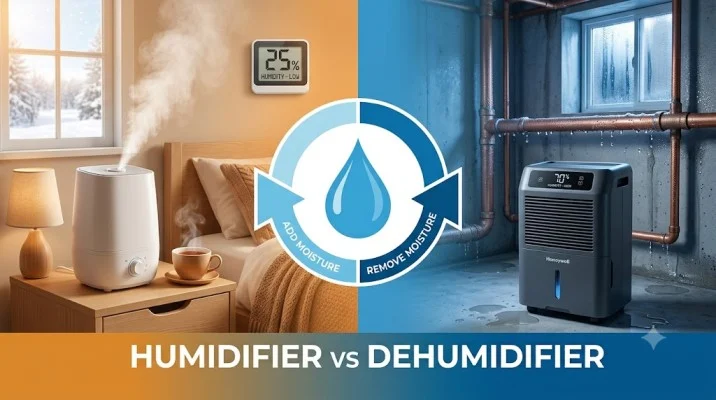
Many people notice damp walls, foggy windows, or dry, uncomfortable air but are unsure which device they actually need. That’s why the keyword humidifier or dehumidifier is searched so often by people trying to create a healthier and more comfortable home.
The confusion usually comes from the similar names and the fact that both devices affect air moisture. It’s easy to mix them up, especially if you’re hearing the terms for the first time or shopping online.
In this guide, you’ll learn the correct difference, why each device is used, when to choose one over the other, and see simple examples that make everything clear. By the end, you’ll feel confident and avoid making the same mistake again, so keep reading.
Quick Answer
A humidifier adds moisture to dry air. A dehumidifier removes excess moisture from humid air. Use a humidifier in winter when heating dries out the air. Use a dehumidifier in summer or damp basements where mold and mildew grow. The ideal indoor humidity is between 30% and 50% .
What Is a Humidifier?
A humidifier is a device that adds water vapor to the air. It increases the humidity level in a room or entire home . When the air is too dry, it can cause problems like dry skin, irritated sinuses, static electricity, and cracked wooden furniture .
Humidifiers release moisture into the air through different methods. Some use fans to blow air over wet filters. Others use ultrasonic vibrations to create a fine mist. Steam vaporizers heat water to produce steam . All types do the same job they put moisture back into the air.
You typically need a humidifier in winter. Heating systems dry out indoor air. If your home feels dry, you wake up with a sore throat, or you get shocked by static electricity, a humidifier can help. It also soothes allergy symptoms and keeps houseplants happy .
What Is a Dehumidifier?
A dehumidifier is a device that removes excess moisture from the air . It reduces humidity levels by pulling in warm, moist air and extracting the water vapor. The dry air is then blown back into the room .
There are two main types. Refrigerative dehumidifiers use cold coils to condense moisture, like water droplets forming on a cold drink . Desiccant dehumidifiers use moisture-absorbing materials like silica gel to pull water from the air . Both types collect water in a tank that you must empty.
You need a dehumidifier in humid climates or in damp areas like basements and bathrooms. Signs include condensation on windows, musty odors, mold spots on walls, or a clammy feeling indoors . Dehumidifiers help prevent mold growth, reduce allergens like dust mites, and protect your home from moisture damage .
The Key Differences
These two devices do opposite jobs. Here is a quick comparison.
Why Is There Confusion Between “Humidifier” and “Dehumidifier”?
The confusion is understandable. Both words look and sound similar. They both deal with indoor air quality. Both are white appliances that sit in your room. Many people mix them up.
The main cause of confusion is the prefix. “Humi-” refers to humidity. The difference is “-ifier” (adds) versus “-dehumidifier” (removes). But when you are shopping quickly, it is easy to grab the wrong one.
Another reason is that symptoms of dry air and humid air can feel similar at first. Dry air causes a sore throat and stuffy nose. Humid air can cause breathing problems and allergies. People often guess without checking their home’s humidity level.
This article solves that confusion. Remember the simple rule: humidifier adds, dehumidifier subtracts. If you add “de-” to the word, you get the opposite.
Common Mistakes with Humidifiers and Dehumidifiers
Here are the most frequent errors people make with these devices.
Example Mistakes
- ❌ “I bought a humidifier because my basement felt damp.” → ✔ “I bought a dehumidifier for my damp basement.”
- ❌ “My skin is so dry in summer. I will get a dehumidifier.” → ✔ “My skin is so dry in winter. I need a humidifier.”
Which One Should You Use?
The choice depends on your environment and your symptoms.
Choose a Humidifier If:
- Your home feels dry and uncomfortable
- You get static electricity shocks
- Your skin, lips, or throat feel dry
- You live in a dry climate or it is winter
- Your heating system runs constantly
Choose a Dehumidifier If:
- Your home feels sticky and clammy
- You see condensation on windows
- You smell musty odors
- You see mold or mildew spots
- You live in a humid climate or it is summer
- You have a damp basement
For All Audiences
- US and global readers: These devices work the same everywhere. Choose based on your climate, not your location.
- Formal writing: Use “humidifier” and “dehumidifier” correctly. Do not mix them up.
- Informal context: It is fine to say “humidity machine” but be clear about whether it adds or removes moisture.
If you are still unsure, buy a hygrometer. This small device measures humidity levels. If the reading is below 30%, use a humidifier. If it is above 60%, use a dehumidifier .
Humidifier or Dehumidifier in Everyday Examples
In Emails
“The humidity in my office is too low. I think we need a humidifier.”
In News Articles
“Residents in flood-damaged areas are using dehumidifiers to prevent mold growth.”
On Social Media
“My dehumidifier is pulling gallons of water from my basement every day!”
In Formal Reports
“A dehumidifier was installed to maintain optimal humidity levels in the archive room.”
In Conversations
“My nose is so dry at night. Should I get a humidifier or dehumidifier?”
Usage Behavior and Search Patterns
Many people search for “humidifier or dehumidifier” because they are unsure which one they need . This shows an informational search intent. Users want a clear comparison to make a buying decision.
Others search for “benefits of a humidifier” or “how to use a dehumidifier.” These searches show people already know which device they want and need more details.
Regional patterns also exist. People in dry climates (like desert regions) search for humidifiers more often. People in humid climates (like coastal areas) search for dehumidifiers more . User behavior follows weather patterns.
Some common typo searches include “humidfier,” “dehumdifier,” and “humitifier.” These are simple spelling errors from fast typing.
Comparison Table
FAQs
What is the difference between a humidifier and a dehumidifier?
A humidifier adds moisture to the air, making it more humid. A dehumidifier removes excess moisture from the air, making it less humid. They serve opposite purposes. Choose based on whether your indoor air is too dry or too damp .
When should I use a humidifier?
Use a humidifier when your indoor air is dry. This often happens in winter when heating systems run. Signs include dry skin, chapped lips, static electricity, and sinus irritation. The ideal humidity level is between 30% and 50% .
When should I use a dehumidifier?
Use a dehumidifier when your air feels damp and sticky. Signs include condensation on windows, musty smells, visible mold, or a clammy feeling. Basements and bathrooms often need one. Dehumidifiers also help with allergies by reducing dust mites and mold .
Can a humidifier make a room too humid?
Yes. If you overuse a humidifier, the air can become too damp. This can cause mold growth, dust mites, and breathing problems. Use a hygrometer to monitor humidity. Keep it between 30% and 50% for comfort and health .
Can a dehumidifier make the air too dry?
Yes. Running a dehumidifier too long can dry out your air below 30%. This leads to dry skin, irritated eyes, and respiratory discomfort. Some models have automatic shut-off features. You can also use a hygrometer to monitor levels .
Which device is better for allergies?
Both can help, depending on your allergy triggers. A humidifier soothes dry sinuses and can reduce airborne allergens. A dehumidifier reduces mold and dust mites by lowering humidity. If you have mold allergies, choose a dehumidifier. If you have dry air allergies, choose a humidifier .
Which is more expensive, a humidifier or dehumidifier?
Dehumidifiers are generally more expensive than humidifiers. Whole-house dehumidifiers can cost around $1,500, while whole-house humidifiers average about $580. Portable models are cheaper for both. Running costs also differ .
Can I use both a humidifier and a dehumidifier in my home?
Yes, you can use both at different times or in different rooms. For example, use a humidifier in a dry bedroom in winter and a dehumidifier in a damp basement in summer. Do not run them in the same room at the same time they will work against each other .
Conclusion
The choice between a humidifier or dehumidifier is simple once you understand your problem. A humidifier adds moisture to dry air. A dehumidifier removes moisture from damp air. They are opposites, and picking the wrong one makes your problem worse.
Check your home for signs. Dry skin, static shocks, and cracked wood mean you need a humidifier. Condensation, musty odors, and mold mean you need a dehumidifier. A hygrometer can tell you for sure.
Both devices improve your comfort and health when used correctly. Clean them regularly to prevent bacteria and mold. Monitor humidity levels to avoid overuse. Now you know exactly which one to choose. Breathe easier and enjoy better indoor air.
Read More Related Articles:
What’s the Difference and Which Term Is Correct in 2026
Cringy or Cringey | Which Spelling Is Correct and When …