A small patch of thick, hard skin on your foot can make every step uncomfortable. At first glance, it may seem impossible to know whether you have a corn or callus. That is why thousands of people search for this term every month. They want to understand the difference, find the right treatment, and avoid making the problem worse.
Although both develop because of repeated pressure or friction, they are not the same. Knowing whether you have a corn or callus can help you choose the best care, reduce pain, and prevent future skin problems. This guide explains the key differences, their causes, symptoms, treatment options, and practical tips in simple language.
Quick Answer
A corn is a small, hard, painful area of thickened skin that usually forms on the toes or other bony parts of the feet because of repeated pressure or rubbing. A callus is a larger, wider patch of thick skin that develops on the soles of the feet, palms, or hands. Calluses are usually less painful than corns.
Example:
- A painful bump on the top of your toe is likely a corn.
- A thick patch under the ball of your foot is usually a callus.
What Is a Corn?
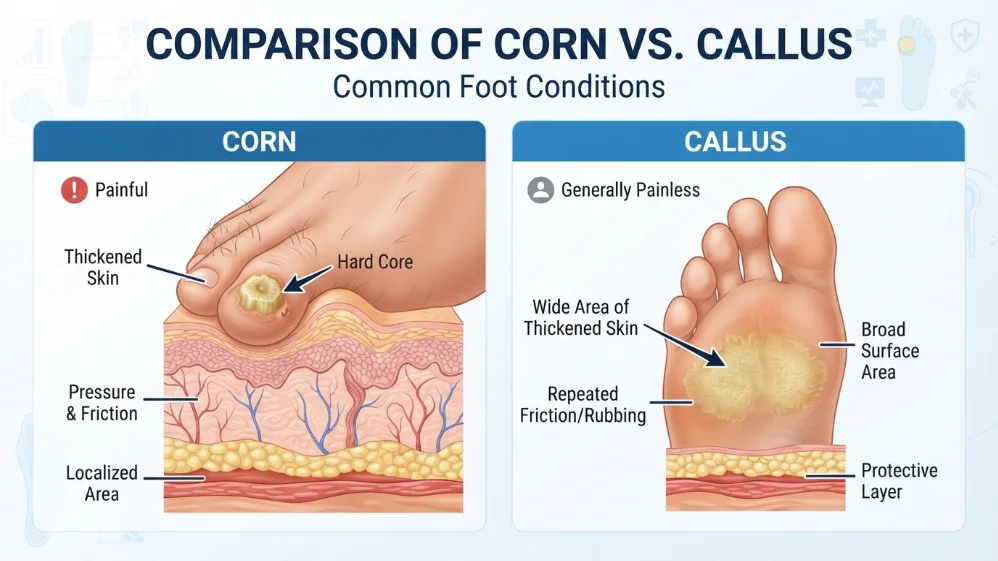
A corn is a small, thickened area of skin that develops when your body tries to protect itself from constant pressure or friction. Corns most often appear on the feet because they receive the greatest amount of pressure during walking or standing.
Unlike calluses, corns are usually smaller and have a hard center surrounded by inflamed skin. Because they press into deeper layers of the skin, they can become quite painful.
Common Places Where Corns Appear
- On the tops of toes
- Between the toes
- On the sides of toes
- On bony parts of the feet
Signs of a Corn
- Small, round area of hard skin
- Hard center or core
- Pain when walking
- Tenderness when touched
- Skin may appear yellow or white
Types of Corns
Hard Corn
The most common type. It develops on bony parts of the foot where shoes create pressure.
Soft Corn
Usually found between the toes. Moisture keeps it softer, but it can still be painful.
Seed Corn
Small corns that often appear on the bottom of the foot. They usually occur in groups.
What Is a Callus?
A callus is a larger area of thickened skin that forms after repeated friction or pressure. Unlike corns, calluses usually spread across a wider area and rarely cause severe pain.
Calluses are your body’s natural way of protecting the skin from injury.
Common Places Where Calluses Appear
- Bottom of the feet
- Heels
- Ball of the foot
- Palms
- Fingers
- Hands
People who lift weights, play musical instruments, or work with tools often develop calluses on their hands.
Signs of a Callus
- Thick, rough skin
- Larger than a corn
- Yellow or gray appearance
- Less sensitive to touch
- Usually painless
Key Differences
| Feature | Corn | Callus |
|---|---|---|
| Size | Small | Large |
| Shape | Round | Wide and uneven |
| Pain | Often painful | Usually painless |
| Center | Hard core | No central core |
| Location | Toes and bony areas | Soles, heels, hands |
| Cause | Pressure on one spot | Repeated friction over a larger area |
The Origin of “Corn” and “Callus”
Although these two words describe similar skin conditions, they come from different origins.
Origin of “Corn”
The medical meaning of corn comes from the Latin word cornu, meaning horn. Doctors used this word because a corn is hard and resembles the texture of an animal’s horn.
Over time, the word entered English and became the common medical name for these painful skin growths.
Origin of “Callus”
The word callus comes from the Latin word callum, meaning hard skin or thickened skin.
It has been used in medicine for hundreds of years to describe skin that becomes thicker after repeated rubbing or pressure.
Why People Confuse These Words
Many people believe that every thick patch of skin on the foot is a corn. In reality, corns and calluses are different conditions.
The confusion happens because:
- Both are caused by pressure.
- Both appear on the feet.
- Both involve thick skin.
- Their treatments are sometimes similar.
Learning the difference helps you choose the correct treatment.
British English vs American English Usage
Unlike many English words, corn and callus are spelled exactly the same in both British English and American English.
| Feature | British English | American English |
|---|---|---|
| Corn | Corn | Corn |
| Callus | Callus | Callus |
| Medical Meaning | Same | Same |
| Everyday Usage | Same | Same |
There is no spelling difference between these words in English-speaking countries.
Why Do People Confuse Corn and Callus?
Even though doctors clearly distinguish between corns and calluses, many people use the terms interchangeably.
Similar Appearance
Both conditions cause thick, rough skin, making them difficult to tell apart without a closer look.
Similar Causes
Both result from repeated pressure or friction caused by shoes, walking, sports, or manual work.
Similar Symptoms
People often notice discomfort, hard skin, and irritation before they know which condition they have.
Online Searches
Many users search for corn or callus because they want to identify a painful spot on their foot before deciding whether they need home treatment or medical care.
Advice from Friends or Family
People sometimes receive incorrect advice from others who assume every hard patch of skin is a corn, adding to the confusion.
Which One Do You Have?
Ask yourself these questions.
Does It Hurt When You Walk?
If yes, it is more likely to be a corn.
Is It a Large Thick Patch?
If yes, it is probably a callus.
Does It Have a Hard Center?
A hard center usually points to a corn.
Is It Under the Ball of Your Foot or Heel?
A large thick patch under these areas is often a callus.
Is It Between Your Toes?
This is commonly a soft corn caused by friction between the toes.
What Causes Corns and Calluses?
Both conditions develop because the skin protects itself from repeated pressure or rubbing.
Common causes include:
- Tight shoes
- High heels
- Shoes that do not fit properly
- Walking barefoot
- Standing for long hours
- Running or sports activities
- Foot deformities such as bunions or hammertoes
- Repeated use of tools
- Playing guitars or other string instruments
- Weightlifting
While the causes are similar, the location and amount of pressure usually determine whether a corn or a callus develops.
Symptoms to Watch For
Corn Symptoms
- Sharp pain while walking
- Hard center
- Small raised bump
- Tenderness
- Inflamed surrounding skin
Callus Symptoms
- Thick rough skin
- Dry appearance
- Mild discomfort
- Larger affected area
- Rarely painful
Treatment Options for Corns and Calluses
The good news is that most corns and calluses can be treated without surgery. The right treatment depends on the cause and how severe the problem is.
Home Treatment for Corns
If you have a corn, try these simple steps:
- Wear comfortable shoes with enough room for your toes.
- Use soft corn pads to reduce pressure.
- Soak your feet in warm water for 10–15 minutes.
- Gently rub the area with a pumice stone after soaking.
- Apply a moisturizing foot cream daily.
Never cut or shave a corn yourself. Doing so can lead to infection.
Home Treatment for Calluses
Calluses often improve with regular foot care.
Helpful tips include:
- Soak your feet in warm water.
- Remove dead skin gently with a pumice stone.
- Moisturize your feet every day.
- Wear cushioned shoes or insoles.
- Avoid walking barefoot on hard surfaces.
Medical Treatment
A healthcare provider may recommend:
- Professional trimming of thick skin
- Prescription creams
- Special shoe inserts (orthotics)
- Treatment for foot deformities
- Surgery in rare cases if bone structure causes repeated pressure
Can You Prevent Corns and Calluses?
Yes. Preventing pressure and friction is the best way to avoid both conditions.
Choose Shoes That Fit Well
Shoes should not squeeze your toes or rub against your feet.
Wear Soft Socks
Good-quality socks reduce friction while walking.
Keep Your Feet Moisturized
Dry skin cracks more easily. A daily moisturizer keeps your skin healthy.
Use Protective Pads
If one area of your foot gets repeated pressure, protective pads can help.
Keep Toenails Trimmed
Long toenails can force your toes into the front of your shoes, increasing pressure.
Check Your Feet Often
Look for thick skin, redness, or sore spots, especially if you spend long hours standing.
Corn or Callus in Everyday Examples
Here are simple examples showing the correct use of these words.
In an Email
I have developed a painful corn on my toe and would like to schedule an appointment.
My callus has become thicker after running every day.
In a News Article
Doctors say wearing properly fitted shoes can help prevent corns and calluses.
On Social Media
I finally bought better walking shoes, and my callus is getting smaller.
I thought it was a callus, but my doctor said it was actually a corn.
In Formal Writing
The patient presented with a painful corn on the fifth toe and a callus under the heel.
Search Trends and User Behavior
Many people search for corn or callus because they notice thick skin on their feet but are unsure what it is.
Common searches include:
- Corn vs callus
- Is it a corn or a callus?
- Painful hard skin on toe
- Thick skin on bottom of foot
- How to remove a corn
- How to treat a callus
- Corn on toe vs callus
- What causes foot corns?
People often search after:
- Buying uncomfortable shoes
- Starting a new job that requires standing
- Beginning a running program
- Feeling pain while walking
Users usually want a quick answer first and then detailed information about treatment and prevention.
Comparison Table
| Feature | Corn | Callus |
|---|---|---|
| Meaning | Small, painful thickened skin | Large protective thickened skin |
| Size | Small | Large |
| Pain Level | Often painful | Usually mild or painless |
| Hard Center | Yes | No |
| Common Location | Toes | Heel, sole, palm |
| Main Cause | Pressure on one point | Repeated friction |
| Treatment | Reduce pressure and protect skin | Moisturize and reduce friction |
| Medical Concern | May need treatment if painful | Usually harmless |
Frequently Asked Questions
1. What is the difference between a corn and a callus?
A corn is a small, painful area of thick skin with a hard center that usually forms on the toes. A callus is a larger patch of thick skin that develops from repeated friction or pressure and is usually less painful.
2. Which is more painful, a corn or a callus?
A corn is usually more painful because it has a hard core that presses into deeper layers of the skin. Calluses are generally larger but cause little or no pain unless they become very thick or cracked.
3. Can a callus turn into a corn?
No. A callus does not become a corn. Although both result from pressure or friction, they develop differently and have distinct characteristics.
4. Should I remove a corn or callus myself?
You should never cut or shave a corn or callus with sharp tools. Gentle soaking, moisturizing, and using a pumice stone are safer options. If the area is painful or infected, seek medical advice.
5. Why do I keep getting corns?
Repeated pressure from tight shoes, high heels, foot deformities, or walking patterns can cause corns to return. Removing the source of pressure is the best long-term solution.
6. Are corns and calluses dangerous?
Most corns and calluses are harmless. However, people with diabetes, poor circulation, or nerve problems should have them checked by a healthcare professional because complications can develop more easily.
7. Can wearing better shoes prevent corns and calluses?
Yes. Properly fitted shoes reduce pressure and friction, making them one of the most effective ways to prevent both corns and calluses.
8. When should I see a doctor?
See a doctor if your corn or callus becomes very painful, starts bleeding, shows signs of infection, or keeps returning despite home treatment.
Conclusion
Understanding the difference between a corn or callus makes it easier to choose the right treatment and protect your feet. A corn is usually small, has a hard center, and often causes pain. A callus is larger, spreads over a wider area, and is the body’s natural response to repeated friction.
While both conditions are common, they can often be prevented by wearing properly fitted shoes, reducing pressure, and caring for your feet regularly. If pain becomes severe or the skin shows signs of infection, consult a healthcare professional. With the right care, most corns and calluses improve and can often be prevented from returning.
Read More Related Articles:
Medical or Abbreviation | Meaning, Usage, Examples, and …
Osaka or Kyoto | Which Japanese City Is Better for Your …