Choosing a new car or business equipment often feels exciting until you reach the payment options. Many people pause when they see lease or finance, unsure which one fits their needs or what each term really means. It’s a common confusion, and thousands of people search for this comparison before making an important financial decision.
The uncertainty usually comes from the similar purpose of these options, making it hard to know which choice offers better value. This guide will break down lease or finance in simple language, explain the key differences with clear examples, and help you avoid costly mistakes in the future. Keep reading to make a more confident and informed decision.
Quick Answer
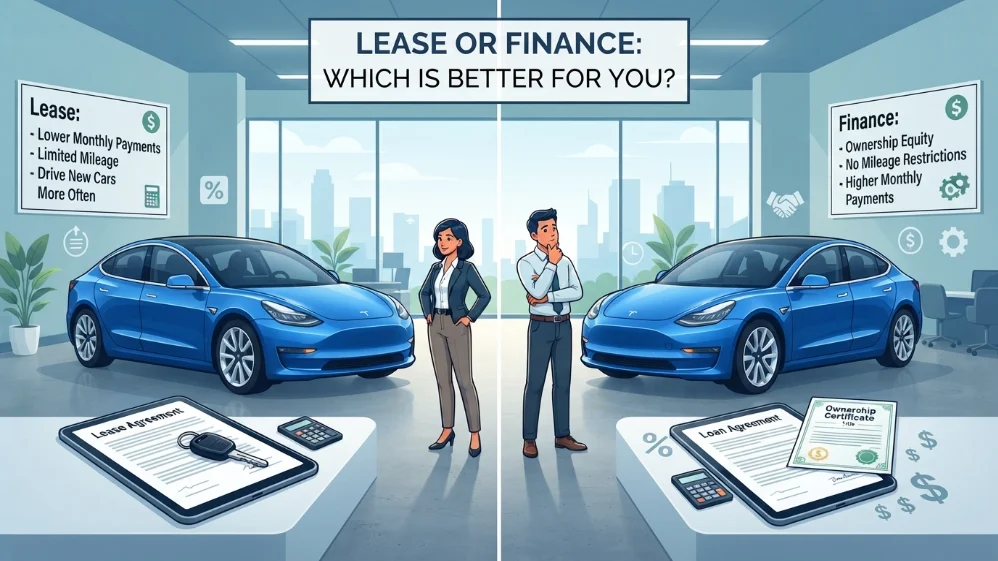
If you want lower monthly payments and the ability to upgrade regularly, leasing is often the better choice. If you want to own the item, build equity, and keep it for many years, financing is usually the better option. Neither choice is always better—the right decision depends on your budget, driving habits, and long-term goals.
Simple Examples
- Lease: You pay to use a car for three years, then return it or lease another one.
- Finance: You borrow money to buy a car, make monthly payments, and own it after the loan is paid off.
The Origin of Lease or Finance
Understanding the history of these words makes their meanings much clearer.
Origin of “Lease”
The word lease comes from the Old French word lais, meaning to let or allow someone to use property for payment. Over time, English adopted the word to describe a legal agreement where one person allows another to use something for a fixed period in exchange for regular payments.
Today, leasing is common for:
- Cars
- Apartments
- Office buildings
- Business equipment
- Farm machinery
- Computer systems
Although you use the item, the owner keeps legal ownership during the lease period.
Origin of “Finance”
The word finance comes from the Latin word finis, meaning end or settlement, and later from the French word finance, referring to the management of money.
Today, finance often means:
- Borrowing money
- Managing money
- Taking a loan
- Paying over time
When you finance a purchase, you gradually become the owner as you repay the loan.
Why Do People Confuse Lease and Finance?
The confusion is not about spelling. Instead, people wonder which option gives better value.
Both options:
- Require monthly payments
- Help you avoid paying the full amount upfront
- Are offered by banks and dealerships
- Often need credit approval
Because they seem similar, many buyers compare lease or finance before making a decision.
British English vs American English Usage
Unlike some English words, lease and finance have the same spelling in both British and American English.
The main difference is how people use the terms.
In the United States, financing a vehicle is very common because many buyers prefer ownership.
In the United Kingdom, leasing has become increasingly popular for both personal and business vehicles, although financing is also widely used.
Comparison Table
| Feature | British English | American English |
|---|---|---|
| Spelling of Lease | Lease | Lease |
| Spelling of Finance | Finance | Finance |
| Correct Usage | ✔ Yes | ✔ Yes |
| Vehicle Leasing | Very Common | Very Common |
| Vehicle Financing | Very Common | Very Common |
| Meaning | Same | Same |
There is no spelling difference between British and American English for these words.
Why Is There Confusion Between Lease or Finance?
People search lease or finance because both choices help them acquire expensive items without paying the full cost immediately. However, they work in different ways.
Here are the biggest reasons for the confusion.
Monthly Payments Look Similar
Many people assume that paying monthly means they are buying the item. This is not always true.
With leasing:
- You pay for the item’s use.
With financing:
- You pay toward owning the item.
Advertisements Can Be Misleading
Car advertisements often highlight low monthly lease payments.
Many buyers compare only the payment amount instead of considering:
- Ownership
- Mileage limits
- Interest
- Long-term cost
Both Require Contracts
Leases and loans involve paperwork, signatures, and payment schedules, making them appear almost identical at first.
Both Need Credit Approval
Banks and finance companies often check your credit before approving either option.
This makes many people think they are exactly the same.
Online Searches Mix the Terms
Search engines show articles comparing both options because buyers often type:
- lease or finance
- finance vs lease
- lease compared with finance
- should I lease or finance
The goal behind these searches is usually the same: finding the better financial choice.
Which Option Should You Choose?
The answer depends on your needs rather than one option being universally better.
Choose Leasing If You:
- Like driving a newer vehicle every few years.
- Want lower monthly payments.
- Drive fewer miles each year.
- Prefer predictable maintenance costs.
- Do not mind returning the vehicle later.
Choose Financing If You:
- Want to own the vehicle.
- Plan to keep it for many years.
- Drive long distances.
- Want no mileage restrictions.
- Like building value over time.
Advice for Different Types of Buyers
United States
Financing is often preferred by buyers who want long-term ownership, while leasing remains popular for those who enjoy upgrading frequently.
United Kingdom
Both leasing and financing are common. Businesses often lease company vehicles, while many individuals choose financing for personal ownership.
Global Users
Think about:
- Your monthly budget
- How long you will keep the item
- Annual usage
- Future resale value
- Maintenance costs
Choosing based on your personal needs is always better than following trends.
Common Mistakes with Lease or Finance
Understanding these common mistakes can save you money.
Mistake 1: Thinking Leasing Means Ownership
❌ “After my lease ends, I automatically own the car.”
✔ Reality:
Most leased vehicles must be returned unless you choose a purchase option.
Mistake 2: Choosing the Lowest Monthly Payment Only
Many buyers focus only on the monthly cost.
Instead, compare:
- Total payments
- Fees
- Interest
- Insurance
- End-of-contract charges
Mistake 3: Ignoring Mileage Limits
Most leases include yearly mileage limits.
Driving beyond those limits may result in extra charges.
Mistake 4: Keeping a Financed Vehicle for Too Short a Time
Selling a financed vehicle soon after purchase may leave you owing more than the vehicle is worth.
Mistake 5: Not Reading the Agreement
Always understand:
- Monthly payment
- Contract length
- Early termination fees
- Maintenance responsibilities
- Purchase options
Reading the full agreement helps prevent expensive surprises.
Lease or Finance in Everyday Examples
Understanding the difference between leasing and financing becomes much easier when you see how people use these terms in everyday life.
In Emails
Lease
We have decided to lease the new office printer for three years to reduce upfront costs.
Finance
We chose to finance the delivery van because we plan to use it for many years.
In News Articles
- The company leased hundreds of electric vehicles to reduce operating costs.
- More families are choosing to finance cars instead of paying the full price upfront.
- Businesses continue to compare lease and finance options before expanding their fleets.
On Social Media
- I decided to lease my new SUV because I love driving the latest model.
- We finally paid off our financed car. It feels great to own it!
In Formal Writing
- The organization signed a five-year lease agreement for new office equipment.
- The business financed the machinery through a commercial loan.
These examples show that both words are correct. The right choice depends on whether you want temporary use or long-term ownership.
Google Trends & Usage Behavior
People search lease or finance because they want help making an important financial decision rather than checking spelling.
Common searches include:
- lease or finance car
- should I lease or finance
- leasing vs financing
- lease compared with finance
- is leasing cheaper than financing
- finance or lease vehicle
People looking for leasing usually want:
- Lower monthly payments
- Newer vehicles
- Flexible upgrades
- Business tax planning
People searching about financing often want:
- Ownership
- Long-term savings
- No mileage restrictions
- Better resale value
Interest in this topic is strong in countries where vehicle loans and leasing are common, including the United States, the United Kingdom, Canada, Australia, and many European countries.
Because both options have advantages, users often compare them before making a purchase.
Comparison Table
| Feature | Lease | Finance |
|---|---|---|
| Ownership | No | Yes, after loan is paid |
| Monthly Payments | Usually lower | Usually higher |
| Upfront Cost | Often lower | May require larger down payment |
| Mileage Limits | Usually yes | No |
| Vehicle Modifications | Limited | Allowed in most cases |
| Maintenance Responsibility | May be partly covered | Owner is responsible |
| Best For | Short-term use | Long-term ownership |
| End of Agreement | Return or buy | Keep the vehicle |
Quick Comparison
| Question | Lease | Finance |
|---|---|---|
| Do you own the vehicle? | No | Yes |
| Can you sell it later? | No | Yes |
| Can you upgrade easily? | Yes | Usually requires selling or trading |
| Good for businesses? | Yes | Yes |
| Good for long-term use? | Not always | Yes |
Frequently Asked Questions
1. What is the difference between lease and finance?
Leasing means you pay to use a vehicle or equipment for a fixed period while the owner keeps legal ownership. Financing means you borrow money to buy the item and become the owner after completing all loan payments.
2. Is leasing cheaper than financing?
Leasing often has lower monthly payments because you only pay for the item’s depreciation during the lease term. Financing may cost more each month, but you own the item once the loan is fully repaid.
3. Which is better, lease or finance?
Neither option is better for everyone. Leasing works well for people who enjoy newer vehicles and lower monthly payments. Financing is usually better for buyers who want ownership and plan to keep the item for many years.
4. Can I buy a leased vehicle later?
Yes. Many lease agreements include a purchase option at the end of the contract. The purchase price is usually stated in the agreement before you sign the lease.
5. Does financing build ownership?
Yes. Every loan payment helps you move closer to full ownership. Once the loan is paid off, the vehicle or equipment belongs to you, provided there are no other legal claims against it.
6. Is leasing good for businesses?
Many businesses choose leasing because it lowers upfront costs, keeps equipment up to date, and offers flexible replacement options. However, financing may be better for equipment that will be used for many years.
7. Can I end a lease early?
Most leases can be ended early, but doing so may involve additional charges. Always read the agreement carefully before signing so you understand any early termination conditions.
8. Should I lease or finance my first car?
If you want affordable monthly payments and plan to change cars every few years, leasing may suit you. If you want to build ownership and keep the car for a long time, financing is often the better choice.
Conclusion
Choosing between lease or finance depends on your goals, budget, and how long you plan to use the vehicle or equipment. Leasing usually offers lower monthly payments and makes it easier to upgrade regularly, while financing gives you full ownership after the loan is paid. There is no single answer that fits everyone.
Compare the total cost, contract terms, mileage limits, maintenance responsibilities, and your future plans before making a decision. By understanding how each option works, you can confidently choose the one that matches your needs and avoid costly mistakes.
Read More Related Articles:
Osaka or Kyoto | Which Japanese City Is Better for Your …
Halves or Halfs | Which Spelling Is Correct? The Complete …