Moving between British and American English can quickly become confusing, especially when a single extra letter changes the way a word looks. Many writers pause when they see totaled or totalled, wondering which spelling is correct for an email, school assignment, business document, or social media post. You’re not the only one facing this common spelling dilemma, and thousands of people search for it every month to avoid embarrassing mistakes.
This guide will clear up the confusion behind totaled or totalled, explain why both spellings exist, show when each one should be used, provide simple real-life examples, and help you write with confidence. By the end, you’ll know how to avoid this mistake in the future so keep reading.
Quick Answer
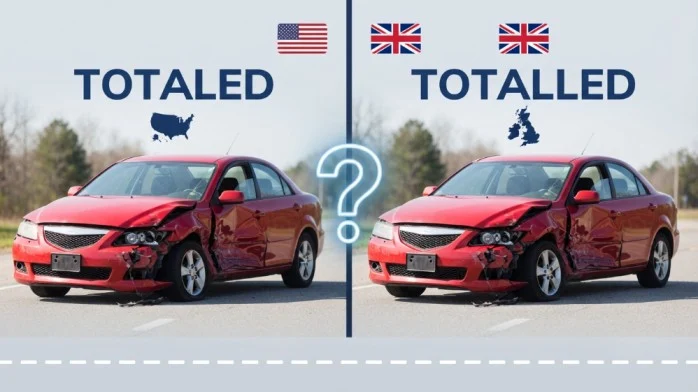
Both totaled and totalled are correct spellings of the same word. Totaled is the standard spelling in American English. Totalled is the standard spelling in British English . For example: “He totaled his car” (US) or “He totalled his car” (UK) .
The Origin of Totaled and Totalled
The word “total” comes from the Latin word totus, which means “whole” or “entire” . It entered English through Old French and Medieval Latin. The verb form, meaning “to add up,” dates back to the late 16th century .
The word has two main meanings. First, it means to add up numbers or amounts. Second, in informal usage, it means to damage something so badly that it is beyond repair . This second meaning became popular with the rise of cars and auto insurance .
The spelling difference comes from how American and British English treat verbs ending in “L.” American English usually drops the second “L” when adding endings. British English keeps it .
British English vs American English Spelling
The spelling difference is clear and consistent. American English uses one “L.” British English uses two “L’s.”
| English Variety | Spelling | Example |
|---|---|---|
| American English | totaled | The accident totaled my car. |
| British English | totalled | The accident totalled my car. |
| American English | totaling | I am totaling the expenses. |
| British English | totalling | I am totalling the expenses. |
This pattern applies to other verbs as well. Words like “canceled” (US) vs. “cancelled” (UK) and “traveled” (US) vs. “travelled” (UK) follow the same rule .
Why Is There Confusion Between “Totaled” and “Totalled”?
Several reasons explain why people get confused about these spellings.
Regional Differences
American and British English have different spelling rules. People who read content from both regions see both versions and wonder which is correct .
Same Pronunciation
Both spellings sound exactly the same when spoken. You cannot hear the difference. This makes it easy to forget which spelling to use in writing .
Spell Checkers
Spell checkers flag one version or the other depending on your language settings. This can make people think one spelling is wrong when both are correct in different contexts .
Search Confusion
Many people search for “totaled or totalled” because they are unsure. They have seen both versions and need guidance .
Auto Insurance Claims
People often need to spell this word when filing insurance claims. The stress of an accident makes them second-guess their spelling .
Which Spelling Should You Use?
The choice depends entirely on your audience.
- For American audiences: Use totaled. This is the standard spelling in the United States .
- For British or Commonwealth audiences: Use totalled. This is the standard spelling in the UK, Australia, Canada, and other Commonwealth countries .
- For global audiences: Choose one and stay consistent. “Totaled” is more common overall because of American influence .
Practical Advice
- In formal writing, follow your style guide. Most US style guides prefer “totaled.” Most UK style guides prefer “totalled.”
- In informal writing, either spelling is acceptable. But be consistent within the same document.
- For insurance claims, use the spelling that matches your country .
Common Mistakes with Totaled and Totalled
Here are the most frequent errors people make.
| Mistake | Correction | Explanation |
|---|---|---|
| Mixing spellings | Pick one and stick with it | Inconsistent spelling looks unprofessional |
| Using “totalled” in American writing | Use “totaled” | American English drops the second L |
| Using “totaled” in British writing | Use “totalled” | British English keeps the second L |
| Spelling as “totalled” in US insurance claim | Use “totaled” | US insurers expect American spelling |
Example Mistakes
- ❌ “The car was totalled.” (American context) → ✔ “The car was totaled.”
- ❌ “The bill totaled up to $100.” (British context) → ✔ “The bill totalled up to $100.”
Totaled and Totalled in Everyday Examples
- In Insurance Claims (US)
“My car was totaled in the accident.”
- In Insurance Claims (UK)
“My car was totalled in the accident.”
- In Business Emails
“I totaled the expenses for this quarter.”
- In News Articles (US)
“The crash totaled three vehicles on the highway.”
- In News Articles (UK)
“The crash totalled three vehicles on the motorway.”
- On Social Media
“I just totaled my car. What a day.”
- In Formal Reports
“The damages totaled over $50,000.”
Google Trends & Usage Behavior
Search data shows clear patterns in how people look for these spellings.
Regional Patterns
“Totaled” is more common in searches from the United States. “Totalled” is more common in searches from the United Kingdom, Australia, and Canada .
Spelling Check Searches
Many users search for “totaled or totalled” because they need confirmation. They want to know which spelling is correct for their situation .
Insurance Context
Many searches relate to car accidents and insurance claims. People are often stressed and want to get the spelling right .
Global Trends
“Totaled” is more common overall due to American influence in media and technology. But “totalled” remains strong in British English countries .
Comparison Table
| Term | Meaning | Correct Usage | Context |
|---|---|---|---|
| totaled | Past tense of total | Correct | American English |
| totalled | Past tense of total | Correct | British English |
| totaling | Present participle | Correct | American English |
| totalling | Present participle | Correct | British English |
| totals | Third person singular | Correct | Both varieties |
FAQs
What is the correct spelling of totaled or totalled?
Both spellings are correct. Totaled is standard in American English. Totalled is standard in British English. Choose based on your audience .
Is totalled a real word?
Yes, totalled is a real word. It is the British English spelling of the past tense of “total.” It is used in the UK, Australia, Canada, and other Commonwealth countries .
Why do people confuse totaled and totalled?
People confuse these spellings because they see both versions. American sources use “totaled.” British sources use “totalled.” Both sound the same when spoken. Spell checkers also add to the confusion .
Which spelling is correct in English?
Both spellings are correct in English. “Totaled” is standard in American English. “Totalled” is standard in British English. The choice depends on your location and audience .
Is totaled the American spelling?
Yes, totaled is the American English spelling. Totalled is the British English spelling. This follows the pattern of dropping the second “L” in American spelling .
What does totaled mean?
Totaled means two things. First, it means to add up numbers. Second, it means to damage something so badly that it cannot be repaired. This meaning is common for cars in accidents .
Can I use totaled and totalled interchangeably?
You can, but be consistent. It is better to stick with one spelling based on your audience. Mixing both in one document looks unprofessional .
Which spelling should I use in an insurance claim?
Use the spelling that matches your country. In the United States, use totaled. In the United Kingdom, use totalled. Insurance companies expect the local spelling .
Conclusion
The answer is simple. Both totaled and totalled are correct. The difference is regional. Use “totaled” for American audiences. Use “totalled” for British and Commonwealth audiences.
Both spellings mean the same thing. They can mean adding up numbers. They can mean destroying a car beyond repair. The meaning is the same. Only the spelling changes.
Remember this simple rule. American English drops the second “L.” British English keeps it. Choose the right spelling for your reader. Be consistent in your writing.
Discover More Post
Bison or Buffalo | What’s the Difference and Which Name Is …
Apple or Android | Which One Should You Choose in 2026