When you need the right word to describe an intense craving, one spelling can make all the difference. Fiending is a word people often type in several different ways, especially when they are unsure whether it should be feening, feinding, fiening, or feending. This confusion is common because these forms can sound similar in casual speech and online conversations.
If you have searched for fiending or feening, fiending meaning, or wondered how to spell feening, you are not alone. In standard English, fiending is the established spelling when you mean strongly craving or desperately wanting something. This guide explains how to define fiending, where the word comes from, and why the alternative spellings appear. You will also learn the feening meaning and how to use the correct form naturally in everyday writing.
Quick Answer
If you’re talking about strongly craving something, fiending is the standard and correct spelling in English.
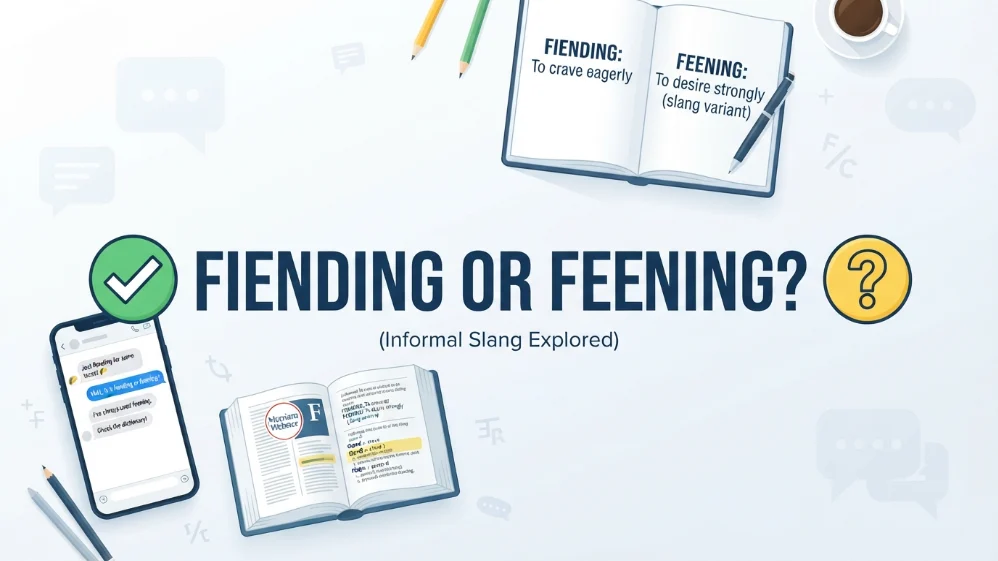
Feening is an informal slang spelling that became popular online and in casual speech. While many people use it in text messages and social media, it is not considered the standard dictionary spelling.
Examples
- I’m fiending for a cup of coffee after work. ✅
- She’s fiending for the new album. ✅
- I’m feening for pizza tonight. ⚠️ Common slang online
The Origin of Fiending or Feening
The word fiending comes from the noun fiend.
Centuries ago, a fiend meant an evil spirit or demon. Over time, English speakers began using the word to describe someone who has an intense desire or obsession. This meaning later expanded into everyday speech.
Today, fiending usually means:
- Having a very strong craving
- Wanting something badly
- Feeling unable to stop thinking about something
The spelling feening appeared much later through spoken language and internet slang. Because many people pronounce fiending without clearly saying the d, listeners often hear it as feening. Social media, texting, and music helped this spelling spread quickly.
Although feening is widely recognized in casual conversation, dictionaries still list fiending as the accepted spelling.
British English vs American English Spelling
Unlike many English words, fiending does not have separate British and American spellings.
Both countries use fiending as the standard form. The spelling feening is informal slang in both regions rather than an accepted regional spelling difference.
| Feature | British English | American English |
|---|---|---|
| Standard spelling | Fiending | Fiending |
| Dictionary accepted | Yes | Yes |
| Feening accepted as standard | No | No |
| Informal slang use | Sometimes | Very common online |
| Best choice for formal writing | Fiending | Fiending |
Examples
British English
- He is fiending for another cup of tea.
American English
- She’s fiending for tacos after work.
Casual Social Media
- I’m feening for summer already.
Why Is There Confusion Between “Fiending or Feening”?
Many people type feening when they actually mean fiending. Here are the biggest reasons why this happens.
Similar Pronunciation
When people speak quickly, the d in fiending is often hard to hear. This makes it sound like feening.
Internet Slang
Social media platforms encourage relaxed spelling. Users often spell words the way they sound instead of using dictionary forms.
Music and Pop Culture
Songs, memes, and online videos frequently use feening, making many people believe it is the official spelling.
Autocorrect Differences
Some keyboards suggest fiending, while others leave feening unchanged if users have typed it before.
Search Habits
People often search words exactly as they hear them. Someone hearing “I’m feening” may search that spelling without knowing the standard form is fiending.
Informal Communication
Friends texting each other usually care less about formal spelling, allowing alternate spellings to spread more quickly.
Which Spelling Should You Use?
The best spelling depends on where and how you are writing.
For School
Choose fiending because it follows standard English rules.
For Work
Always use fiending in emails, reports, and professional writing.
For News or Articles
Editors generally prefer fiending because it is recognized by dictionaries.
For Social Media
Either spelling may appear, but feening is mainly used to match casual online speech.
For Global Readers
Using fiending helps everyone understand your meaning and avoids confusion.
Simple Rule
- Formal writing → Fiending ✅
- Casual slang → Feening is common but informal ⚠️
Common Mistakes with Fiending or Feening
Many writers make small mistakes when using these words. Here are some of the most common ones.
| Incorrect | Correct | Why |
|---|---|---|
| I’m feening for coffee in a business email. | I’m fiending for coffee. | Standard spelling is preferred. |
| She is fiend for pizza. | She is fiending for pizza. | The verb form needs -ing. |
| He was feening during the report. | He was fiending during the report. | Use the standard form in formal writing. |
| Fiending means being a monster. | Fiending means strongly craving something. | Modern meaning is different. |
| Feening is the official spelling. | Fiending is the accepted spelling. | Dictionaries recognize fiending. |
Easy Tip to Remember
Think of the word fiend.
If the base word is fiend, then the correct verb form is naturally fiending.
Fiending or Feening in Everyday Examples
Seeing a word used in real situations makes it much easier to remember. Here are examples of fiending and feening in different types of writing.
Correct
I’m fiending for a short break after today’s meetings.
This sounds natural and uses the standard spelling.
News Article
Fans were fiending for tickets as soon as the concert dates were announced.
Professional publications would almost always use fiending.
Social Media
I’m feening for iced coffee right now.
This is a common slang style. Many people understand it, but it is still considered informal.
Formal Writing
The athlete appeared to be fiending for another opportunity to compete.
This is the preferred spelling for essays, reports, and professional documents.
Text Message
I’m feening for some pizza tonight.
Friends may use this spelling in casual conversations.
Everyday Conversation
I’ve been fiending for chocolate all afternoon.
This sentence is correct in both spoken and written English.
Academic Writing
The word fiending is commonly used to describe an intense craving in informal English.
This spelling is the safest choice for educational writing.
Entertainment Review
Viewers were fiending for the next episode after the season finale.
Again, the standard spelling works best.
Google Trends and Search Behavior
Many people search fiending or feening because they hear the word in conversations, songs, or social media posts but are unsure how it should be written.
Most searches fall into these categories:
- People want to know which spelling is correct.
- They wonder whether feening is a real English word.
- They hear the word in music lyrics and search the spelling they heard.
- Students want the correct version for school assignments.
- Writers want to avoid spelling mistakes in professional documents.
- Social media users search to understand modern slang.
- English learners want to know whether both spellings are acceptable.
Online conversations have helped feening become popular, but dictionaries and style guides continue to recognize fiending as the standard spelling.
Comparison Table
| Feature | Fiending | Feening |
|---|---|---|
| Meaning | Strongly craving something | Same intended meaning in slang |
| Dictionary word | Yes | No (informal slang spelling) |
| Correct standard English | Yes | No |
| Common online | Yes | Very common |
| Formal writing | Recommended | Avoid |
| School assignments | Recommended | Not recommended |
| Business emails | Recommended | Avoid |
| Text messages | Acceptable | Common slang |
| Social media | Common | Very common |
| Best overall choice | Fiending | Casual use only |
Frequently Asked Questions
What is the correct spelling: fiending or feening?
Fiending is the correct and accepted spelling in standard English. It comes from the word fiend and means having a very strong craving or desire. Feening is a popular slang spelling that appears mostly in casual online conversations.
Is feening a real word?
Feening is widely used in everyday speech and on social media, but it is not generally accepted as the standard dictionary spelling. It is best viewed as an informal variation of fiending rather than a separate English word.
Why do people confuse fiending and feening?
The confusion comes from pronunciation. When people say fiending quickly, the d sound often becomes very soft. As a result, listeners hear feening and later write the word exactly as they heard it.
Which spelling is correct in English?
Standard English uses fiending. It is the preferred spelling for books, newspapers, schools, workplaces, and professional writing. Feening is mostly limited to slang and informal conversations.
Is feening just a typo?
Not always. Sometimes it is a typing mistake, but many people intentionally use feening because it reflects the way they pronounce the word. Even so, it is still considered informal.
Can I use feening in professional writing?
It is better not to. Professional documents, business emails, academic papers, and published articles should use fiending because it follows standard English spelling rules.
Does fiending always refer to addiction?
No. Although it can describe intense cravings related to addiction, it is also commonly used in everyday situations. Someone can be fiending for coffee, pizza, chocolate, a vacation, or a new movie without implying addiction.
Why is feening so common on social media?
People often spell words the way they sound when texting or posting online. Music, memes, and internet culture have made feening a familiar slang spelling, even though fiending remains the standard form.
Conclusion
Understanding the difference between fiending or feening is simple once you know where each spelling comes from. Fiending is the correct spelling in standard English and should be used in formal writing, schoolwork, professional communication, and published content. It comes from the word fiend and describes a strong craving or intense desire for something.
Feening, on the other hand, is an informal spelling that became popular through spoken language, music, texting, and social media. While many people recognize it, it is not considered the standard form. If you want your writing to be clear, accurate, and widely accepted, choose fiending. Save feening for casual conversations where slang is appropriate.
Read More Related Articles:
The Correct Spelling Explained with Examples in 2026
Lawyer or Attorney| What’s the Difference and Which Word …
Breech or Breach| What’s the Difference? Meaning, …