Quick Answer:
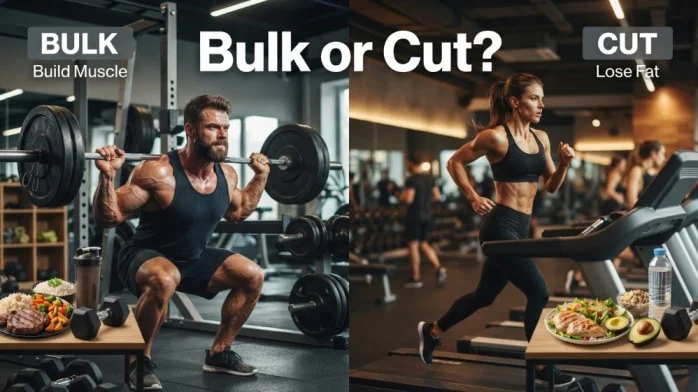
Bulk means eating in a calorie surplus to support muscle growth, while cut means eating in a calorie deficit to reduce body fat. The right choice depends on your current body composition, training goals, and fitness experience.
Standing in front of the mirror and wondering whether you should bulk or cut is a common moment for anyone serious about fitness. You may want bigger muscles but also want a leaner waist. The problem is that these two goals often seem to pull in opposite directions. That is why people search for bulk or cut before changing their diet or training plan. Choosing the wrong approach can make progress feel slow and frustrating.
The good news is that the difference is easier to understand than it first appears. A bulk focuses on gaining muscle with enough food and proper resistance training, while a cut focuses on losing body fat while protecting as much muscle as possible. This guide explains both approaches, when to use each one, common mistakes, and how to make a smarter choice.
What Does Bulk Mean?
In fitness, a bulk is a period focused mainly on building muscle and increasing body weight. The basic idea is to eat enough calories to give your body the energy and nutrients it needs to support muscle growth.
A successful bulk is not simply about eating as much food as possible. A thoughtful approach usually combines:
- A small calorie surplus
- Enough protein
- Regular strength training
- Adequate sleep
- Good overall nutrition
- Consistent progress tracking
During a bulk, some body fat may increase along with muscle. That is normal. The goal is to make muscle gain the main focus while keeping unnecessary fat gain under control.
There is also a difference between a lean bulk and what people often call a dirty bulk.
A lean bulk uses a controlled calorie surplus and focuses on nutritious foods. A dirty bulk involves eating very large amounts of food with less attention to food quality.
For most people, a controlled approach is easier to manage and can make the later cutting phase less difficult.
What Does Cut Mean?
A cut is a period when the main goal is reducing body fat while keeping as much muscle as possible.
To lose body fat, your body generally needs to use more energy than it receives from food over time. This is known as a calorie deficit.
A good cut is not supposed to mean starving yourself.
It usually includes:
- A moderate calorie deficit
- Plenty of protein
- Resistance training
- Nutritious meals
- Adequate sleep
- Patience and consistency
The scale may move downward during a cut, but weight loss is not the only thing that matters. Keeping muscle and strength as much as possible is also important.
This is why resistance training and sufficient protein remain valuable during a cutting phase.
Bulk or Cut:
The biggest difference is the direction of your calorie intake and your main goal.
| Feature | Bulk | Cut |
|---|---|---|
| Main goal | Build muscle | Reduce body fat |
| Calories | Usually above maintenance | Usually below maintenance |
| Body weight | Generally increases | Generally decreases |
| Strength training | Important | Important |
| Protein | Important | Important |
| Body fat | May increase | Usually decreases |
| Typical focus | Muscle growth | Fat loss and muscle retention |
In simple terms, bulking is about adding size, while cutting is about revealing more definition.
Neither phase is automatically better. They simply serve different purposes.
When Should You Bulk?
Bulking may make sense if your main goal is to gain muscle and you are relatively lean or have limited muscle mass.
For example, someone who has been strength training consistently but struggles to gain weight may benefit from spending time in a controlled surplus.
A bulk can also make sense when your strength and muscle-building progress have slowed because you are not eating enough to support your training.
However, there is no universal body-weight number that tells everyone when to bulk. People have different heights, body compositions, training histories, and goals.
Your current physique, experience, eating habits, and personal preferences all matter.
The key is to avoid thinking that a bulk requires unlimited eating. More food does not automatically mean more muscle.
When Should You Cut?
A cut may be appropriate when reducing body fat is your main goal or when you have gained more body fat than you wanted during a previous muscle-building phase.
Some people also prefer to cut before beginning another controlled bulk because they feel more comfortable starting from a leaner point.
During a cut, the goal should not be to lose weight as quickly as possible.
A very aggressive calorie deficit can make training harder and may increase the risk of losing muscle along with fat.
A slower, controlled approach is often easier to maintain.
Your energy levels, training performance, hunger, recovery, and progress should all be considered rather than focusing only on the number shown by the scale.
Can You Build Muscle and Lose Fat at the Same Time?
Yes, it can happen, especially in certain situations.
This process is often called body recomposition. Instead of deliberately spending months in a large surplus or deficit, a person aims to improve body composition by building muscle while reducing body fat.
Body recomposition may be more realistic for:
- Beginners
- People returning to training after a long break
- People with higher amounts of body fat
- Individuals who are improving their training and nutrition at the same time
However, muscle gain and fat loss can become harder to maximize simultaneously as someone becomes more advanced.
This is one reason experienced lifters may use separate periods of bulking and cutting.
How Much Should You Eat During a Bulk?
A bulk works best when the calorie surplus is controlled rather than excessive.
Eating far more than your body needs does not guarantee faster muscle growth. Your body has limits on how quickly it can build new muscle tissue.
A reasonable approach is to monitor your weight, strength, measurements, and overall progress.
If your body weight is rising very quickly and your waist size is increasing much faster than expected, your calorie intake may be higher than necessary.
Food quality also matters.
Useful foods for a muscle-building diet can include:
- Eggs
- Fish
- Chicken
- Lean meats
- Beans
- Greek yogurt
- Milk
- Rice
- Potatoes
- Oats
- Fruits
- Vegetables
- Nuts and seeds
The exact amount you need depends on your body, activity level, and goals.
How Much Should You Eat During a Cut?
A cut requires a calorie deficit, but bigger is not always better.
A moderate deficit can make it easier to train, recover, and stick with the plan.
Protein becomes especially important because you want to give your body a good nutritional environment while losing weight.
Meals can include lean protein, vegetables, fruits, whole grains, potatoes, rice, and other nutrient-rich foods.
You also need to consider hunger.
A diet that looks perfect on paper but leaves you constantly hungry may be difficult to follow. Sustainable eating habits usually matter more than extreme short-term restrictions.
The goal is steady progress that you can maintain.
Common Bulk or Cut Mistakes
Many people make the same mistakes when deciding between a bulk and a cut.
Eating Too Much During a Bulk
A bulk does not mean turning every meal into a massive calorie load. Excessive eating can lead to unnecessary fat gain.
Cutting Too Aggressively
Trying to lose fat as quickly as possible can make workouts and daily life much harder. It may also make muscle retention more difficult.
Ignoring Protein
Protein supports muscle repair and growth. It remains important during both phases.
Stopping Strength Training During a Cut
Some people focus only on cardio when trying to lose fat. Resistance training can help provide an important muscle-retention signal.
Changing Plans Every Week
Body composition does not transform overnight. Constantly switching between bulking and cutting can make progress difficult to measure.
Focusing Only on the Scale
Body weight is useful, but it does not tell the whole story. Strength, waist measurements, photos, and how your clothes fit can provide additional information.
Bulk or Cut for Beginners
Beginners often do not need to rush into an aggressive bulk or cut.
When someone first starts resistance training, the body can respond quickly to consistent workouts and better nutrition. Building good habits may be more valuable than immediately following an advanced bodybuilding phase.
A beginner can focus on:
- Learning proper exercise technique
- Training consistently
- Eating enough protein
- Getting adequate sleep
- Eating mostly nutritious foods
- Tracking progress over time
If you have a significant amount of body fat, a fat-loss phase may be a sensible starting point.
If you are very lean and mainly want to gain muscle, a controlled surplus may make more sense.
Personal circumstances matter more than following a trend.
Bulk or Cut for Experienced Lifters
Experienced lifters often have more specific goals.
Someone preparing for a bodybuilding competition may follow a carefully planned cutting phase. Another lifter focused on increasing muscle size may spend more time in a controlled surplus.
At an advanced level, small changes in calorie intake, training volume, recovery, and body weight can matter more.
Progress may also become slower.
That does not necessarily mean the plan has failed. Advanced trainees simply have less room for rapid improvement than someone who has just started lifting.
For this reason, experienced athletes often track several measurements rather than relying on appearance alone.
How Long Should a Bulk or Cut Last?
There is no universal timeline.
The length of a bulk or cut depends on your starting point, goal, rate of progress, training experience, and how much body composition you want to change.
A bulk may continue until enough muscle has been gained or body fat reaches a level the person is no longer comfortable with.
A cut may continue until a desired level of leanness is reached.
Instead of choosing a fixed number of weeks simply because someone online recommends it, monitor your results and adjust when needed.
Fitness progress is rarely perfectly linear.
FAQs
What is better, bulk or cut?
Neither is automatically better. A bulk is designed to support muscle growth, while a cut is designed to reduce body fat. The better choice depends on your current body composition, training experience, and primary fitness goal.
Should I bulk or cut first?
If you have relatively high body fat, cutting first may be more suitable. If you are already lean and want to gain muscle, a controlled bulk may make more sense. Beginners may also benefit from focusing on basic training and nutrition first.
Can I bulk without gaining fat?
It is possible to limit fat gain, but completely avoiding fat gain during a calorie surplus is difficult. A controlled surplus, proper training, adequate protein, and gradual weight gain can help keep unnecessary fat gain lower.
Can I cut without losing muscle?
You can reduce the chance of muscle loss by using a moderate calorie deficit, eating enough protein, and continuing resistance training. However, some muscle loss can occur during fat loss, especially when dieting aggressively or reaching very low body-fat levels.
How long should you bulk before cutting?
There is no fixed number of weeks that works for everyone. A bulk can continue while muscle and strength are progressing and body-fat gain remains acceptable. Your starting condition and personal goal should guide when you change phases.
Is bulking necessary to build muscle?
No. A large calorie surplus is not required for muscle growth. Beginners and some people can gain muscle while eating around maintenance or even while losing body fat. However, a controlled surplus can make muscle gain easier for some experienced lifters.
Is cutting the same as dieting?
Cutting is a type of dieting focused specifically on reducing body fat while preserving muscle. It usually involves a calorie deficit, high-quality nutrition, protein, and resistance training. General dieting can have many other goals besides changing body composition.
What should I do after a cut?
After reaching your desired level of leanness, you can gradually return toward calorie maintenance. From there, you may maintain your physique or begin a controlled muscle-building phase. Avoid immediately moving from a strict cut to uncontrolled overeating.
Conclusion
Choosing between bulk or cut becomes much easier once you understand what each phase is designed to accomplish. A bulk focuses on supporting muscle growth through adequate food, protein, and resistance training. A cut focuses on reducing body fat while working to preserve muscle. Your current body composition, training experience, and personal goal should guide the decision rather than copying someone else’s routine.
Remember that you do not need an extreme approach to make progress. A controlled calorie surplus, moderate deficit, consistent training, good nutrition, and patience can take you much further. When in doubt, focus first on building sustainable habits and measuring progress over time.
Read More Related Articles:
Peeking or Peaking| What’s the Difference? Meaning, …
Narita or Haneda| Which Tokyo Airport Should You …
Bali or Thailand| Which Destination Is Better for Your Next …