Quick Answer
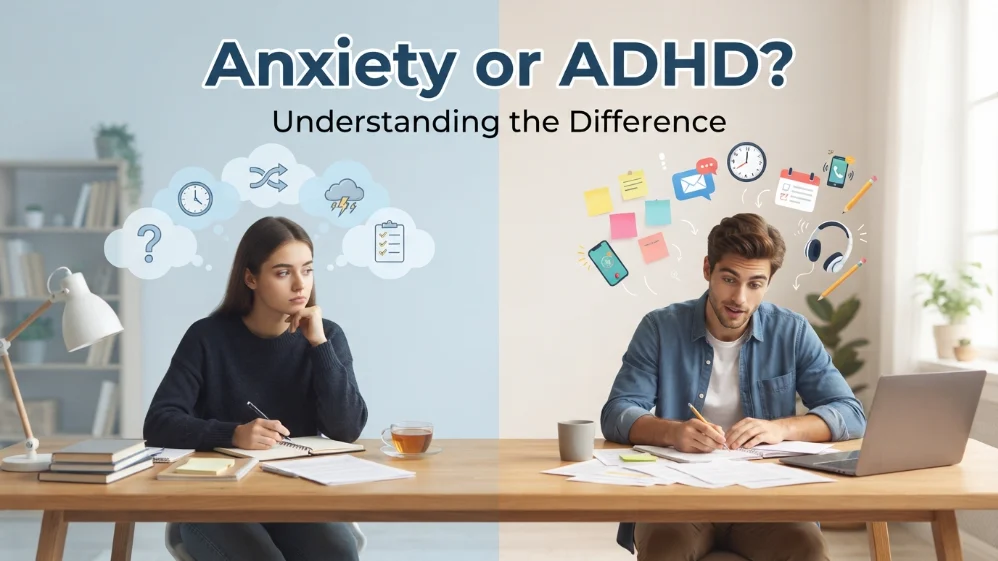
Anxiety
mainly involves excessive worry, fear, or nervousness, while ADHD mainly affects attention, impulse control, and activity levels. Because some symptoms can look similar, telling them apart requires looking at the pattern, cause, and timing of symptoms.
It can be surprisingly hard to tell whether someone is dealing with anxiety or ADHD when both can make everyday life feel harder. Trouble focusing, restlessness, forgetfulness, racing thoughts, and difficulty completing tasks can appear in either situation. That overlap often leaves people wondering whether their struggles come from worry, attention problems, or a combination of both.
The key is to look beyond one symptom. Anxiety is usually driven by fear, worry, or a sense that something may go wrong, while ADHD involves ongoing difficulties with attention, impulsivity, or regulating activity. This guide explains the important differences, the symptoms they can share, how they may occur together, and what clues can help you understand the distinction more clearly.
What Is the Difference Between Anxiety and ADHD?
Anxiety and ADHD are different conditions, even though some experiences can look similar.
Anxiety is commonly linked with excessive worry, fear, nervousness, tension, and physical signs of stress. A person may struggle to concentrate because their mind is occupied with worries.
ADHD, or attention-deficit/hyperactivity disorder, is a neurodevelopmental condition associated with persistent patterns of inattention, hyperactivity, and impulsivity that can affect daily functioning.
A useful way to think about the difference is this:
Anxiety can make it difficult to focus because your mind is worried.
ADHD can make it difficult to focus because regulating attention is difficult.
However, real life is not always this simple. A person can experience both, and symptoms may influence each other.
The Origin and Meaning of Anxiety and ADHD
The word anxiety comes from Latin roots associated with feelings of distress, uneasiness, or being troubled. In modern English, anxiety describes a state involving worry, fear, apprehension, or nervous tension.
ADHD is an abbreviation for attention-deficit/hyperactivity disorder. The name reflects the main areas involved in the condition: attention regulation, hyperactivity, and impulsivity.
The two terms developed from different areas of medicine and psychology. Anxiety describes a broad group of emotional and physical responses related to fear or worry, while ADHD describes a developmental pattern involving attention and self-regulation.
This difference matters because the same outward behavior can have different underlying reasons.
For example, someone who avoids an assignment may be worried about failing. Another person may want to complete it but repeatedly lose track of the task, become distracted, or struggle to organize the steps.
The behavior looks similar from the outside, but the reason may be very different.
Symptoms Anxiety and ADHD Can Have in Common
The overlap between anxiety and ADHD is one reason people often search for this comparison.
Both can be associated with:
- Difficulty concentrating
- Restlessness
- Sleep problems
- Irritability
- Forgetfulness
- Feeling overwhelmed
- Difficulty completing tasks
- Racing or busy thoughts
- Problems with organization
- Reduced performance at school or work
These similarities do not mean the conditions are the same.
For example, a person with anxiety may have trouble remembering information because worry is taking up their mental attention. Someone with ADHD may forget information because maintaining attention or organizing information is difficult.
The symptom alone does not always tell the whole story.
How Anxiety Usually Affects Attention
Anxiety can make concentration feel almost impossible when the brain is focused on perceived danger or future problems.
Imagine trying to read an important email while repeatedly thinking:
if I make a mistake?
What if something goes wrong?
What will happen tomorrow?
The person may appear distracted, but their attention is not necessarily wandering randomly. It may be repeatedly pulled toward worry.
Anxiety can also produce physical tension, rapid heartbeat, restlessness, fatigue, and sleep difficulties. Poor sleep and constant worry can then make concentration even harder.
This can create a frustrating cycle where worry affects focus, poor focus creates more mistakes, and mistakes create more worry.
How ADHD Usually Affects Attention
ADHD can affect the ability to regulate attention rather than simply having too little attention.
Someone with ADHD may become distracted by sounds, thoughts, notifications, conversations, or unrelated tasks. They may start several activities but struggle to finish them.
They may also experience:
- Losing things frequently
- Forgetting appointments or instructions
- Difficulty managing time
- Procrastination
- Trouble organizing tasks
- Acting without thinking
- Interrupting conversations
- Difficulty sitting still
- Frequently switching between activities
One important point is that ADHD does not mean a person can never concentrate.
Some people with ADHD can become deeply absorbed in an activity that is highly interesting, rewarding, or stimulating. The challenge may be controlling attention consistently across different situations.
Anxiety or ADHD: Why Restlessness Happens
Restlessness can occur with both anxiety and ADHD, but it may feel different.
With anxiety, restlessness may come from nervous energy. A person may feel tense, uneasy, or unable to relax because they are anticipating something negative.
With ADHD, restlessness may be connected to difficulty regulating activity levels or remaining engaged with situations that feel unstimulating.
For example, an anxious person might pace because they are worried about an upcoming event. A person with ADHD might move around because sitting through a long, repetitive activity is difficult.
The behavior is similar. The internal experience may not be.
Anxiety or ADHD in Children and Adults
Anxiety and ADHD can affect people at different ages, but their presentation may change over time.
In children, attention problems can be especially noticeable at school. A child may struggle to follow instructions, stay seated, complete homework, or participate in class.
Anxiety in children may appear as excessive reassurance-seeking, avoidance, fear, physical complaints, irritability, or difficulty separating from caregivers.
Adults may experience more subtle difficulties.
An adult with ADHD might struggle with deadlines, household organization, time management, work tasks, or remembering responsibilities.
An adult with anxiety might spend significant time worrying about relationships, work, health, finances, mistakes, or future events.
These patterns can overlap, making professional evaluation important when symptoms are persistent or disruptive.
Can You Have Anxiety and ADHD at the Same Time?
Yes. A person can have both anxiety and ADHD.
When they occur together, the symptoms can sometimes reinforce one another. For example, ADHD-related difficulty with organization may lead to missed deadlines. Those missed deadlines can increase stress and worry. Increased worry may then make concentration even more difficult.
This can create a cycle:
Attention difficulty → missed task → increased stress → more worry → harder concentration.
Having symptoms from both conditions does not mean one automatically caused the other.
It is also important not to assume that every concentration problem means ADHD or every restless feeling means anxiety. Other factors, including sleep problems, stress, medications, and other health conditions, can affect attention and mood.
How Professionals Tell Anxiety and ADHD Apart
A professional does not usually determine the difference from one symptom.
Instead, they consider the broader pattern.
Important questions may include:
- When did the symptoms begin?
- How often do they occur?
- Where do they happen?
- Do they affect school, work, relationships, or daily responsibilities?
- Are they connected to particular fears or worries?
- Were attention or behavior difficulties present during childhood?
- Do symptoms occur even when the person is relaxed?
- Are there other possible explanations?
For ADHD, developmental history can be especially important because ADHD symptoms begin during childhood, even if they are not recognized until adulthood.
For anxiety, the focus may include the nature of worries, fears, avoidance, physical symptoms, and how strongly anxiety interferes with daily life.
A qualified healthcare professional can assess these patterns more accurately than an online checklist.
Common Mistakes When Comparing Anxiety and ADHD
One common mistake is assuming that poor concentration automatically means ADHD.
That is not necessarily true. Anxiety, stress, sleep deprivation, depression, medication effects, and other factors can interfere with concentration.
Another mistake is assuming that worry automatically means anxiety. Everyone experiences worry sometimes. Occasional concern is different from persistent worry that causes significant distress or disruption.
A third mistake is treating ADHD as simply being unable to pay attention.
ADHD can involve difficulties with organization, impulse control, time management, working memory, and regulating attention.
It is also easy to rely on social media descriptions of symptoms. Short posts can be useful for starting a conversation, but they cannot establish a diagnosis.
Anxiety or ADHD in Everyday Examples
Consider two people who cannot finish a report.
Example 1: Anxiety
A person repeatedly rereads the report because they are afraid it contains mistakes. They worry about how their manager will react and spend more time checking than writing.
Example 2: ADHD
Another person intends to finish the report but checks their phone, starts another task, forgets where they saved a document, and loses track of time.
Both people may submit work late.
The visible result is similar, but the underlying pattern can be different.
Another example involves conversations.
Someone experiencing anxiety may remain quiet because they fear saying something embarrassing.
Someone with ADHD may interrupt because they have a thought they want to express immediately and struggle to hold it while waiting for another person to finish.
Again, the same situation can have different explanations.
Comparison Table: Anxiety vs ADHD
| Feature | Anxiety | ADHD |
|---|---|---|
| Main pattern | Worry, fear, or nervousness | Attention regulation, impulsivity, and/or hyperactivity |
| Concentration | Often disrupted by worry | Often affected by distractibility or attention regulation |
| Restlessness | May come from nervous tension | May relate to activity or self-regulation |
| Forgetfulness | Can happen during stress or worry | Can be a persistent difficulty |
| Thoughts | Often focused on worries or possible problems | May shift quickly between ideas or stimuli |
| Avoidance | Often linked to fear | May result from difficulty starting or organizing tasks |
| Development | Can begin at different life stages | Begins during childhood |
| Can occur together? | Yes | Yes |
When Should You Seek Professional Help?
Consider speaking with a qualified healthcare professional when symptoms are persistent, difficult to control, or interfering with everyday life.
Professional support can be useful when concentration problems affect school or work, worry becomes overwhelming, sleep is regularly disrupted, relationships are suffering, or daily responsibilities become difficult to manage.
It is better to look at the whole pattern than to try to choose a label based on one symptom.
A professional can consider personal history, developmental history, current symptoms, and other possible explanations.
If symptoms are severe or causing immediate safety concerns, seek appropriate urgent medical support rather than relying on an online article.
FAQs
Can anxiety look like ADHD?
Yes. Anxiety can sometimes cause poor concentration, restlessness, forgetfulness, and difficulty completing tasks, which may resemble ADHD. The important difference is often the underlying pattern. Anxiety-related attention problems may be strongly connected to worry, fear, or stressful situations.
Can ADHD cause anxiety?
ADHD itself is different from anxiety, but people with ADHD can also experience anxiety. Difficulties with organization, deadlines, impulsivity, or daily responsibilities may create repeated stress. However, anxiety should be assessed separately rather than automatically assumed to come from ADHD.
How do I know if I have anxiety or ADHD?
You cannot reliably determine the answer from one symptom or an online quiz. Look at the long-term pattern, when symptoms began, what triggers them, and how they affect daily life. A qualified professional can provide a proper assessment.
Is overthinking ADHD or anxiety?
Overthinking is more commonly associated with anxiety when thoughts repeatedly focus on worries, fears, possible mistakes, or future problems. However, people with ADHD can also experience busy or rapidly changing thoughts. The content, pattern, and impact of thoughts matter.
Can ADHD cause racing thoughts?
Some people with ADHD describe having many thoughts at once or difficulty slowing their mental activity. However, racing thoughts are not exclusive to ADHD. Anxiety and other conditions can also cause this experience, so the symptom alone cannot identify the underlying cause.
Does anxiety make you forgetful?
Yes. Strong worry can interfere with concentration and make it harder to process or remember information. Stress and poor sleep can add to the problem. Occasional forgetfulness during stressful periods does not automatically mean someone has ADHD.
Can you have ADHD without anxiety?
Yes. ADHD and anxiety are separate conditions, and a person can have ADHD without having an anxiety disorder. Some people experience both, while others experience neither. An individual assessment is needed to understand which symptoms are present.
Which is worse, anxiety or ADHD?
Neither should automatically be considered worse. Both can affect daily life in different ways, and their impact varies from person to person. The more useful question is how severe the symptoms are, how long they have lasted, and how much they interfere with life.
Conclusion
The difference between anxiety or ADHD is not always obvious because both can involve poor concentration, restlessness, forgetfulness, and feeling overwhelmed. Anxiety is generally centered around worry, fear, or nervous tension, while ADHD involves persistent difficulties with attention regulation, impulsivity, and/or hyperactivity.
The two can also occur together, which can make the picture more complicated. Instead of judging the cause from one symptom, consider the full pattern, including when symptoms began and how they affect everyday life. If these difficulties are persistent or interfering with work, school, relationships, or daily responsibilities, a qualified healthcare professional can help identify what is happening and what support may be appropriate.
Discover More Post
Empathetic or Empathic | What’s the Difference and Which …
Intel or Ryzen| Which CPU Is Better in 2026? Complete …
Peeking or Peaking| What’s the Difference? Meaning, …