Everyday writing can slow you down when a single word looks wrong, even after you have typed it several times. That is exactly why so many people search for hastle or hassle before sending an email, finishing homework, or publishing something online. It is a common confusion, and you are far from the only person who has faced it.
The mix-up usually happens because of similar pronunciation, spelling mistakes, and autocorrect suggestions. As a result, many writers are unsure which form is correct and which one should be avoided in formal or everyday English.
This guide will clear up the hastle or hassle confusion by explaining the correct spelling, why the mistake happens, how to use the word properly, and real-life examples that make it easy to remember. Keep reading to write with confidence and avoid this mistake in the future.
Quick Answer
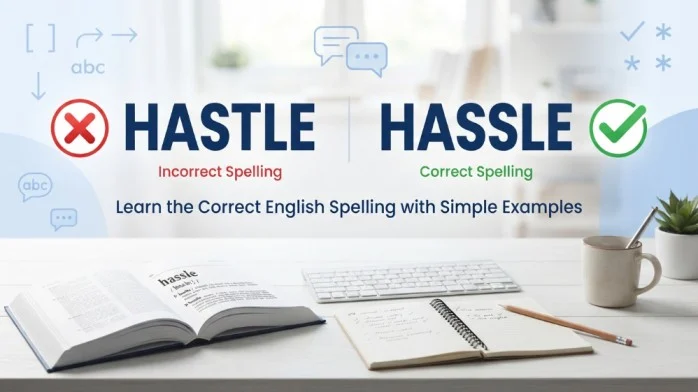
If you’re choosing between hastle or hassle, the correct spelling is hassle.
Hassle means a problem, inconvenience, annoyance, or something that requires unnecessary effort.
Examples:
- Moving to a new apartment can be a hassle.
- I don’t want the hassle of filling out extra paperwork.
- Online shopping saves you the hassle of visiting many stores.
Hastle is not a standard English word. It is simply a common spelling mistake caused by pronunciation and fast typing.
The Origin of “Hassle”
Understanding where a word comes from often makes it easier to remember the correct spelling.
The word hassle became popular in American English during the twentieth century. It originally referred to arguments, disputes, or irritating situations. Over time, its meaning expanded to include anything that causes unnecessary trouble or inconvenience.
Today, hassle is commonly used in everyday conversations, business writing, newspapers, advertisements, and online communication.
Examples include:
- Airport security can sometimes be a hassle.
- We want to make the process hassle-free.
- Customer support removed the hassle of returning the product.
Why does “hastle” appear?
The incorrect spelling hastle usually appears because:
- People pronounce the word very quickly.
- The “s” sound may seem like it should include a “t.”
- Fast typing creates accidental mistakes.
- Spell-check is ignored or unavailable.
- Many users search first before confirming the correct spelling.
There has never been an accepted English version spelled hastle.
British English vs American English Spelling
Unlike many English words that have different spellings in the UK and the US, hassle stays exactly the same.
Whether you’re writing for American readers, British readers, Australian audiences, or Canadian publications, the spelling never changes.
| Feature | British English | American English |
|---|---|---|
| Correct spelling | Hassle | Hassle |
| Incorrect spelling | Hastle | Hastle |
| Meaning | Trouble or inconvenience | Trouble or inconvenience |
| Everyday example | The trip was a hassle. | The trip was a hassle. |
| Formal writing | Use hassle | Use hassle |
Key takeaway
There is no British or American spelling difference for this word.
Always write hassle.
Why Is There Confusion Between “Hastle or Hassle”?
Although the answer is simple, the confusion is surprisingly common.
Here are the biggest reasons.
1. Pronunciation confusion
When spoken quickly, hassle sounds almost like it contains a silent “t.”
People often spell words exactly how they hear them.
2. Fast keyboard typing
Many spelling mistakes happen because fingers move faster than the brain.
Typing:
h-a-s-t-l-e
instead of
h-a-s-s-l-e
is an easy keyboard slip.
3. Autocomplete habits
Some phones or browsers may temporarily remember an incorrect spelling if users repeatedly type it.
That makes the typo appear more often than expected.
4. Visual similarity
The two words look almost identical.
Many readers overlook the extra t, especially while proofreading quickly.
5. Search engine behavior
Many people search:
- hastle meaning
- hastle or hassle
- is hastle correct
- hassle spelling
Search engines recognize these typo-based searches because users want confirmation before using the word.
6. Limited vocabulary exposure
People who hear hassle more often than they read it are much more likely to invent the spelling hastle.
Reading regularly helps reinforce the correct version.
Which Spelling Should You Use?
The answer depends on one simple rule.
Use hassle every time.
There are no situations where hastle is considered correct in standard English.
If you write for the United States
Always use:
Hassle
Example:
The registration process was a hassle.
If you write for the United Kingdom
Also use:
Hassle
Example:
Parking in the city centre is a hassle.
If you write for international readers
Choose hassle because it is universally accepted.
It appears in:
- business reports
- newspapers
- academic writing
- blogs
- marketing materials
- websites
- customer support documents
Formal writing
Correct:
- The application process created unnecessary hassle.
- We aim to reduce customer hassle.
Incorrect:
- The application process created unnecessary hastle.
Informal writing
Correct:
- That was such a hassle.
- I don’t want the hassle today.
- Travel can be a hassle during holidays.
Even in casual conversations, hassle remains the correct spelling.
Common Mistakes With “Hastle or Hassle”
Small spelling errors can make writing appear less professional. Below are some of the most common mistakes people make and the correct way to write them.
| Incorrect | Correct | Explanation |
|---|---|---|
| Hastle | Hassle | Missing the second s and adding an unnecessary t |
| Hasle | Hassle | One s is missing |
| Hassel | Hassle | Letters are in the wrong order |
| Hazzle | Hassle | Incorrect pronunciation-based spelling |
| Hassal | Hassle | Final letters are incorrect |
| Hasel | Hassle | Missing one s and changing the ending |
Corrected examples
❌ Filling these forms is a hastle.
✅ Filling these forms is a hassle.
❌ It became a real hasle.
✅ It became a real hassle.
❌ Shopping during holidays is a hassel.
✅ Shopping during holidays is a hassle.
❌ The repair was a hazzle.
✅ The repair was a hassle.
A simple memory trick
Remember this sentence:
Double the S, skip the T, and you’ll always spell hassle correctly.
Another easy trick is to think of hassle-free, a phrase you see on products, websites, and advertisements. Since you’ve likely seen hassle-free many times, it reinforces the correct spelling naturally.
Hassle in Everyday Examples
Seeing a word used in real situations is one of the easiest ways to remember its correct spelling. Below are common examples from daily life.
Emails
✔ Correct
Sorry for the delay. We experienced a small hassle with our system.
✔ Correct
Thank you for your patience. We have resolved the hassle and your order is now on the way.
Workplace
- The hiring process was a hassle, but it was worth it.
- We want to reduce paperwork and remove unnecessary hassle.
- Digital forms help employees avoid extra hassle.
News Writing
- Heavy traffic caused a major hassle for commuters.
- The new policy removes the hassle of long waiting lines.
- Travelers faced a hassle after several flights were delayed.
Social Media
- Airport security was such a hassle today.
- Finally finished moving. It was a huge hassle.
- Online banking saves so much hassle.
School
- Carrying all those books was a hassle.
- The project looked difficult, but it wasn’t much of a hassle after planning properly.
Everyday Conversation
- Let’s avoid the hassle and order food online.
- I don’t want the hassle of fixing it myself.
- Buying tickets early saves a lot of hassle.
Search Behavior and Usage Patterns
People search hastle or hassle because they want a quick answer before using the word in writing. Most searches happen after someone notices a spelling warning or feels uncertain while typing.
Common searches include:
- hastle or hassle
- hassle spelling
- is hastle correct
- hassle meaning
- how do you spell hassle
- hassle definition
- hassle examples
- hassle-free meaning
Many users first hear the word in conversation and later type it from memory. Because English pronunciation does not always match spelling, the extra t often appears by mistake.
Search engines recognize this behavior and usually direct users toward the correct spelling, hassle, because it is the accepted English word found in dictionaries, books, and professional writing.
Comparison Table – Hastle vs Hassle
| Word | Meaning | Correct or Incorrect | Context of Use |
|---|---|---|---|
| Hassle | Trouble, inconvenience, annoyance, extra effort | ✅ Correct | Everyday English, business writing, education, media |
| Hastle | No accepted English meaning | ❌ Incorrect | Common typing or spelling mistake |
Quick Summary
| Feature | Hassle | Hastle |
|---|---|---|
| Dictionary word | Yes | No |
| Standard English | Yes | No |
| Used in professional writing | Yes | No |
| Found in books and newspapers | Yes | No |
| Recommended spelling | Yes | Never |
Frequently Asked Questions
1. What is the correct spelling: hastle or hassle?
The correct spelling is hassle. It means a problem, inconvenience, or something that requires extra effort. Hastle is not recognized as a standard English word and should be avoided in both formal and informal writing.
2. Is hastle a real English word?
No. Hastle does not appear as a standard word in modern English dictionaries. It is simply a spelling mistake that usually happens because people type quickly or spell the word based on its pronunciation.
3. Why do people confuse hastle and hassle?
The confusion comes from pronunciation, typing habits, and visual similarity. Many people hear the word before they see it written, so they mistakenly insert the letter t when trying to spell it from memory.
4. Which spelling should I use in school or at work?
Always use hassle. It is the only accepted spelling in essays, reports, emails, business documents, articles, and professional communication. Using hastle may appear as a spelling error.
5. Is hassle used in British and American English?
Yes. Both British English and American English use the spelling hassle. Unlike some words that change between regions, this word has only one correct spelling worldwide.
6. What does hassle mean?
Hassle means an inconvenience, difficulty, annoyance, or something that causes unnecessary effort. It often describes everyday situations that are frustrating but not serious.
Example:
Renewing the license was a real hassle.
7. How can I remember the correct spelling?
Think about the common phrase hassle-free. You have probably seen it on websites, advertisements, and product packaging. Remembering this familiar phrase makes it much easier to recall the correct spelling.
8. Can I ever use hastle?
No. Unless you are intentionally showing a spelling mistake or quoting someone else’s typo, you should never write hastle. In normal English, always choose hassle.
Final Thoughts
Choosing between hastle or hassle is easier once you know the rule. Hassle is the only correct spelling in English, you’re writing an email, school assignment, business document, article, or social media post. The spelling hastle is simply a common typo caused by pronunciation and fast typing.
A helpful way to remember the correct form is to think of the familiar phrase hassle-free, which appears in advertisements and everyday writing around the world. When in doubt, check for the double s and leave out the extra t. Using the correct spelling will make your writing clearer, more professional, and easier for every reader to understand.
Read More Related Articles:
Apple or Android | Which One Should You Choose in 2026
Gout or Bunion | What’s the Difference? Symptoms, Causes …