Every day, people type watch or warning while writing emails, school assignments, social media posts, or important documents, only to pause and wonder if they’ve chosen the right word. It’s a common mix-up, and you’re far from the only one. Thousands of English learners and native speakers search for this keyword because these words look familiar but are used in very different situations.
Understanding the difference between watch or warning can improve your writing and help you avoid confusing mistakes. In this guide, you’ll learn the correct usage, discover why these words are often mixed up, see clear examples, and understand simple tips to remember them with confidence. Keep reading to master the difference once and for all.
Quick Answer
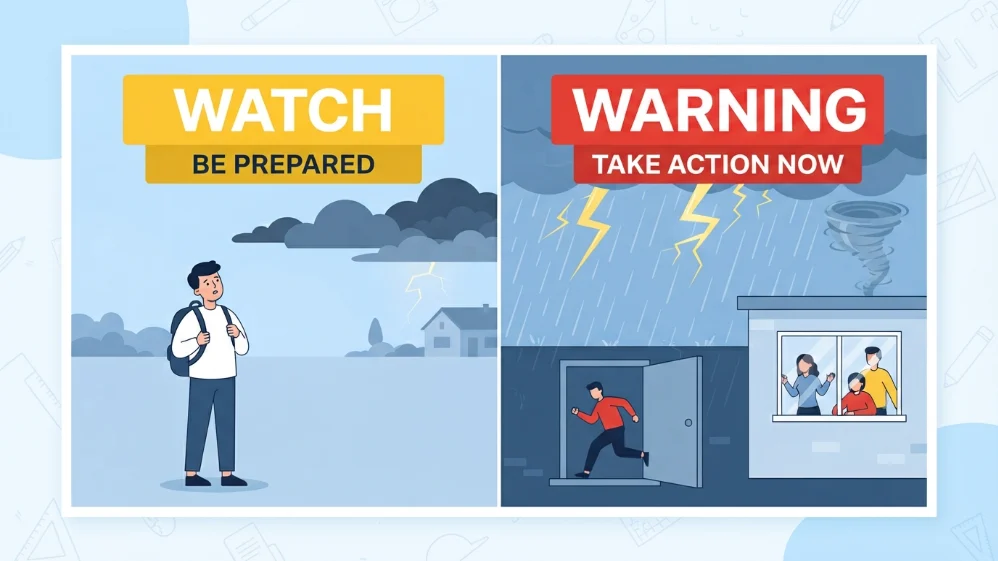
Watch means be prepared because something may happen. It tells people to stay alert and monitor the situation.
Warning means danger is happening now or is about to happen. It tells people to take action immediately.
Examples
- A tornado watch means conditions could produce a tornado.
- A tornado warning means a tornado has been spotted or detected.
The easiest way to remember:
- Watch = Be Ready
- Warning = Act Now
The Origin of Watch or Warning
Understanding where these words came from makes their meanings easier to remember.
Origin of “Watch”
The word watch comes from the Old English word wæcce, meaning to stay awake, guard, or keep looking for danger. Long ago, guards watched towns during the night to protect people from attacks or fires.
Over time, the meaning expanded to include:
- observing carefully
- staying alert
- waiting for possible danger
- monitoring a situation
Today, the same idea appears in weather forecasts and emergency alerts.
Origin of “Warning”
The word warning comes from the Old English verb warnian, which meant to advise someone of danger before harm happens.
Its purpose has always been clear:
- alert people
- explain a danger
- encourage immediate action
Modern emergency services still use this original meaning.
Why People Mix Them Up
The confusion is not about spelling.
Instead, it happens because both words often appear together.
For example:
- Flood Watch
- Flood Warning
- Winter Storm Watch
- Winter Storm Warning
People see both phrases but may not know that one means possible danger while the other means real or immediate danger.
British English vs American English Usage
Unlike many English words, watch and warning have the same spelling in British and American English.
The difference is not regional.
It is about meaning.
| Feature | British English | American English |
|---|---|---|
| Spelling of Watch | Watch | Watch |
| Spelling of Warning | Warning | Warning |
| Meaning of Watch | Possible risk, stay alert | Possible risk, stay alert |
| Meaning of Warning | Immediate danger | Immediate danger |
| Used in weather reports | Yes | Yes |
| Used by emergency services | Yes | Yes |
| Correct spelling | Watch and Warning | Watch and Warning |
Example in British English
Heavy rain is expected tomorrow. A flood watch has been issued.
Example in American English
A flood warning is in effect for the river area.
The words remain identical in both varieties of English.
Why Is There Confusion Between “Watch or Warning”?
Many people search for watch or warning because the words appear together in situations involving safety. While they are related, they do not mean the same thing.
Here are the main reasons for the confusion.
They Are Used Together
Weather forecasts often mention both.
For example:
- Thunderstorm Watch
- Thunderstorm Warning
Someone reading quickly may assume they mean the same thing.
Both Deal With Danger
Each word is connected to emergencies.
However:
- Watch means danger is possible.
- Warning means danger is happening or expected very soon.
That small difference is important.
News Headlines Move Quickly
News articles often shorten information.
A reader may only notice the words watch and warning without reading the explanation.
People Remember Only Part of the Message
Someone might hear:
“A warning has been issued.”
Later they may mistakenly call it a watch.
Students and English Learners
People learning English often focus on vocabulary instead of context.
Since both words relate to safety, they may believe they are interchangeable.
Fast Online Searches
Many users type:
- watch or warning
- watch vs warning
- difference between watch and warning
- watch meaning
- warning meaning
They simply want a quick explanation before writing or understanding a news report.
Which Word Should You Use?
The correct choice depends on the situation.
Use Watch When
Choose watch if something could happen.
Examples:
- A hurricane may develop.
- Heavy snow is possible.
- Strong winds are expected later.
- Officials are monitoring conditions.
Think:
Nothing dangerous has happened yet, but stay alert.
Use Warning When
Choose warning when danger is real or about to happen.
Examples:
- A tornado has been seen.
- Flash flooding is occurring.
- Wildfire is approaching homes.
- People should leave immediately.
Think:
The danger is real. Take action now.
For International Readers
Whether you write for readers in the United States, the United Kingdom, Canada, Australia, or other English-speaking countries, the meanings remain the same.
Professional writing should always use the correct term based on the situation, not personal preference.
Easy Memory Trick
Remember this simple rule:
Watch = Wait and Prepare
Warning = Move and Protect Yourself
This trick helps many learners remember the difference within seconds.
Common Mistakes with Watch or Warning
Even native English speakers sometimes confuse watch and warning, especially when reading weather reports or emergency updates. Here are some of the most common mistakes and the correct way to use each word.
| Incorrect Sentence | Correct Sentence | Why It Is Wrong |
|---|---|---|
| A tornado warning means a tornado might form. | A tornado watch means a tornado might form. | A watch is issued when conditions are favorable. |
| A flood watch means flooding is happening now. | A flood warning means flooding is happening now. | A warning means the danger is occurring or expected very soon. |
| The warning tells people to stay alert only. | The watch tells people to stay alert. | A watch is about preparation, not immediate action. |
| The watch means evacuate immediately. | The warning may require immediate action or evacuation. | Warnings call for action. |
Mistake 1: Treating Both Words as Synonyms
Many people believe watch and warning have the same meaning. They do not.
- Watch = Possible danger.
- Warning = Immediate or confirmed danger.
Mistake 2: Ignoring the Level of Risk
Choosing the wrong word can confuse readers about how serious the situation is.
For example:
❌ A wildfire watch has reached the town.
✅ A wildfire warning has been issued because the fire is close.
Mistake 3: Misunderstanding Weather Reports
Weather alerts often change from a watch to a warning.
This does not mean officials changed their minds. It means the situation has become more serious.
Watch or Warning in Everyday Examples
Knowing the meanings is helpful, but seeing them in real situations makes them much easier to remember.
In Emails
Watch
Please keep a watch on the weather before your trip tomorrow.
Warning
The airport has issued a warning about severe storms this evening.
In News Reports
Watch
A winter storm watch has been announced for northern areas.
Warning
Officials issued a tsunami warning after the earthquake.
On Social Media
Watch
Stay alert. A heat watch has been announced for tomorrow.
Warning
Please stay indoors. A dust storm warning is active across the city.
In Schools
Teachers may tell students:
We are under a weather watch today, so outdoor activities may change.
If conditions become dangerous, the school may receive a weather warning and move everyone indoors.
During Travel
Watch
Drivers should keep watching weather updates because a snow watch remains in effect.
Warning
Travelers should avoid the highway because a flood warning has been issued.
At Work
Managers often share alerts with employees.
Example:
A strong wind watch has been announced for tomorrow morning.
Later:
A high wind warning is now active. Please avoid outdoor work.
Simple Comparison
Imagine clouds gathering before heavy rain.
A watch says:
Be prepared. Bad weather could develop.
A warning says:
The storm is here. Protect yourself now.
Search Behavior and Usage Patterns
People search for watch or warning for several practical reasons.
Many readers:
- hear both words during weather forecasts
- receive emergency phone alerts
- read breaking news
- prepare for travel
- help children understand safety messages
- improve their English writing
Searches often increase during:
- hurricane season
- winter storms
- flood emergencies
- wildfire events
- tornado outbreaks
People are usually looking for one simple answer:
Does a watch mean prepare, or does it mean danger is already happening?
The answer remains simple:
- Watch means prepare.
- Warning means act.
Because emergency alerts are used around the world, this topic remains important throughout the year.
Comparison Table
| Feature | Watch | Warning |
|---|---|---|
| Meaning | Conditions are favorable for danger | Danger is occurring or expected soon |
| Risk Level | Possible | Immediate |
| Action Needed | Stay alert and prepare | Take protective action |
| Used By | Weather agencies, emergency officials | Weather agencies, emergency officials |
| Example | Tornado Watch | Tornado Warning |
| Best Time to Use | Before the event develops | During or just before the event |
Frequently Asked Questions
1. What is the difference between a watch and a warning?
A watch means conditions are right for a dangerous event to develop, so people should stay alert and prepare. A warning means the danger has been detected or is expected very soon, so people should act immediately and follow safety instructions.
2. Which word shows more danger?
A warning shows a higher level of danger because the threat is real or about to happen. A watch only means that conditions could become dangerous if the situation changes.
3. Is a watch less serious than a warning?
Yes. A watch is an early alert that encourages preparation. A warning is more serious because it tells people the threat is happening or is very close. Warnings require quicker action.
4. Why do weather reports use both words?
Weather experts use both words to help people understand different stages of risk. A watch gives people time to prepare, while a warning tells them it is time to protect themselves.
5. Do watch and warning have different spellings in British and American English?
No. Both words are spelled the same in British English and American English. Their meanings also remain the same across English-speaking countries.
6. Can watch and warning be used in everyday writing?
Yes. Although they are common in weather reports, both words are also used in news stories, workplaces, schools, travel advice, health notices, and public safety announcements.
7. How can I remember the difference easily?
Think of this simple rule:
Watch = Prepare
Warning = Protect
If danger is only possible, use watch. If danger is happening or about to happen, use warning.
8. Which word should I use in formal writing?
Use the word that accurately describes the situation. If you are discussing a possible threat, use watch. If you are describing an immediate or confirmed threat, use warning. Choosing the correct word makes your writing clear and trustworthy.
Conclusion
Understanding the difference between watch and warning is easier than it first appears. A watch tells you to stay alert because conditions could become dangerous, while a warning tells you that the danger is already happening or is expected very soon. Remembering this simple difference will help you understand weather reports, emergency alerts, news stories, and everyday conversations with confidence. you are writing an article, reading a forecast, or following public safety advice, choosing the correct word makes your message clearer and more accurate. Keep the simple rule in mind: watch means prepare, warning means act, and you will rarely confuse them again.
Read More Related Articles:
Apple or Android | Which One Should You Choose in 2026
Gout or Bunion | What’s the Difference? Symptoms, Causes …
Bride or Die| What Does It Mean and Is It the Correct Phrase