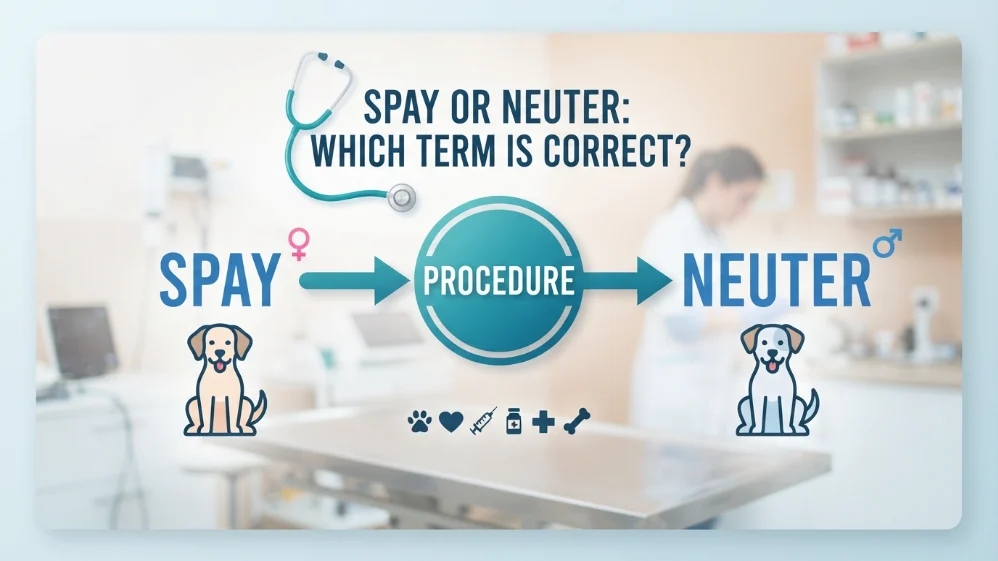
Every year, countless pet owners visit a veterinarian, fill out adoption forms, or read animal care guides and come across the phrase spay or neuter. It sounds simple at first, but many people become confused about what these terms actually mean, when each one should be used, and why they are often mentioned together. That is why thousands of people search for spay or neuter to avoid misunderstanding this common pet care topic.
This guide will clear up the confusion in simple, easy to follow language. You will learn the correct meaning of each term, understand the reason behind the difference, see real-life examples, and discover how to use them correctly without making the same mistake again. Keep reading to understand everything you need to know with confidence.
Quick Answer
Both spay and neuter refer to surgical sterilization procedures for animals, but they apply to different sexes. Spay specifically means removing the reproductive organs of a female animal. Neuter generally refers to sterilizing a male animal, though it can sometimes be used as a general term for both sexes. The correct choice depends entirely on the animal’s sex.
Examples
The veterinarian will spay the female kitten tomorrow. (Female animal)
We need to neuter our male dog before he turns one year old. (Male animal)
If you are unsure about the animal’s sex or want to use a general term, neuter is often acceptable for both, but spay is always specific to females.
The Origin of Spay or Neuter
The word spay comes from the Old French word espeer, which meant to cut with a sword. This term later evolved through Middle English to describe the surgical removal of female reproductive organs. The word has been used in veterinary contexts for centuries and remains the standard term for female sterilization.
Neuter has a different origin. It comes from the Latin word neuter, which means neither one nor the other. In grammar, neuter refers to words that are neither masculine nor feminine. In veterinary medicine, the term was adopted to describe the removal of male reproductive organs, essentially making the animal “neither” male nor female in terms of reproductive ability.
Over time, these two distinct terms became the standard vocabulary in veterinary medicine. Spay remained specifically for females, while neuter became the general term for males. However, in everyday conversation, many people use neuter as a catch-all term for both procedures, which adds to the confusion. Understanding these origins helps explain why the terms have different applications and why using the correct one matters in professional contexts.
British English vs American English Usage
Unlike many grammar differences, spay and neuter are used consistently across English-speaking countries. Both terms have the same meanings in American, British, Australian, and other varieties of English. The difference lies more in professional versus casual usage rather than regional variation.
| Feature | Spay | Neuter |
|---|---|---|
| Meaning | Female sterilization | Male sterilization |
| Correct? | Yes | Yes |
| Main Usage | Specifically female animals | Specifically male animals |
| General Term | No | Sometimes used as general term |
| Veterinary Usage | Always female | Always male |
| Casual Conversation | Female only | Male or general |
| Formal Writing | Female only | Male only |
| Example | The vet will spay the cat. | The vet will neuter the dog. |
The table shows that while both terms are universally understood, their specific applications remain consistent. Spay never applies to males, and neuter technically refers to males, though it may be used generally in casual speech.
Why Is There Confusion Between “Spay or Neuter”?
The confusion between these two terms exists because many people use them interchangeably without realizing the biological difference. Unlike many grammar questions where one word is wrong, spay and neuter both describe sterilization procedures, but they apply to different sexes.
Here are the biggest reasons people get confused.
Different Sexes, Similar Procedures
Both procedures achieve the same goal of preventing reproduction, but they involve different surgical techniques. Since the outcome is identical, many people assume the words are synonyms.
Casual Language Usage
In everyday conversation, pet owners often say “I need to get my pet neutered” regardless of whether the pet is male or female. This casual usage blurs the distinction between the terms.
Veterinary Clinic Signs
Many veterinary clinics use the phrase “spay and neuter” as a combined service offering. This pairing makes the terms seem like they mean the same thing, even though they refer to different procedures.
Internet Content
Online articles sometimes use the terms incorrectly or interchangeably, especially when written by non-professionals. This misinformation spreads confusion among pet owners.
School Education Gaps
Most people learn about spay and neuter only when they get a pet, not through formal education. Without proper instruction, they may not understand the specific meanings of each term.
Search Intent
People searching spay or neuter usually want to know:
- Which term applies to their pet?
- What is the difference between the procedures?
- Which word should they use when talking to their vet?
- Are the terms interchangeable?
- What does each procedure involve?
Understanding these questions helps explain why this veterinary topic remains popular among pet owners.
Which Form Should You Use?
The best choice depends on the sex of the animal you are describing. Unlike regional differences, this is a matter of biological accuracy.
If Your Animal is Female
Always use spay. This is the correct and specific term for sterilizing a female animal.
Example
We decided to spay our female rabbit to prevent unwanted litters.
If Your Animal is Male
Use neuter. This is the correct and specific term for sterilizing a male animal.
Example
The rescue organization will neuter all male dogs before adoption.
If You Are Speaking Casually About an Unknown Animal
Neuter can sometimes serve as a general term, but it is more accurate to determine the animal’s sex first.
Example
Have you had your pet neutered? (General, but less precise)
In Veterinary Clinics
Always use the specific term based on the animal’s sex. Veterinary professionals expect precision.
Example
The clinic schedules spay surgeries for females and neuter surgeries for males.
In Animal Welfare Writing
Use the correct term for each animal. When discussing both procedures together, say “spay and neuter” to cover both sexes.
Example
Our program promotes spaying and neutering to reduce pet overpopulation.
Common Mistakes with Spay or Neuter
Even experienced pet owners sometimes make mistakes with these terms. Here are common errors and how to avoid them.
Mistake 1: Using Neuter for Female Animals
❌ We need to neuter our female puppy.
✅ We need to spay our female puppy.
Neuter technically applies to males. Using it for females is incorrect.
Mistake 2: Using Spay for Male Animals
❌ The vet will spay our male cat.
✅ The vet will neuter our male cat.
Spay is exclusively for females. Never use it for males.
Mistake 3: Confusing the Surgical Procedures
❌ A spay and a neuter are the same surgery.
✅ A spay removes female reproductive organs, while a neuter removes male reproductive organs.
The procedures are different and apply to different sexes.
Mistake 4: Using the Wrong Past Tense
❌ We have spayed our male dog.
✅ We have neutered our male dog.
The past tense follows the same sex-specific rules.
Mistake 5: Assuming Interchangeability
❌ Spay and neuter mean the same thing.
✅ Spay and neuter are related but apply to different sexes.
While related, these terms are not interchangeable.
Spay or Neuter in Everyday Examples
Seeing both terms in real situations makes the difference much easier to understand.
In a Veterinary Appointment
The veterinarian recommended that we spay our female cat before her first heat cycle. For our male dog, we scheduled a neuter procedure next month.
In Animal Rescue Communication
All adopted animals from our shelter are spayed or neutered before going to their new homes. Female pets receive spay surgery, while male pets undergo neutering.
On Social Media
Just scheduled my kitten’s spay appointment for next week. She is a female, so spay is the right procedure for her. My friend’s male puppy got neutered yesterday.
In Formal Animal Welfare Writing
The organization provides low-cost spay and neuter services to the community. Spay surgeries are performed on female animals, while neuter surgeries are performed on males.
In Everyday Conversation
We finally got our female dog spayed last Tuesday. She recovered quickly. Our neighbor had his male puppy neutered at the same clinic.
In Educational Materials
Understanding the difference between spay and neuter helps pet owners make informed decisions. Spay refers to female sterilization, while neuter refers to male sterilization.
Google Trends and Usage Behavior
Search interest in spay or neuter remains consistently high because pet owners regularly need this information. New pet owners, in particular, search for these terms when preparing for their animal’s veterinary care.
Common reasons people search this topic include:
- Determining which procedure their pet needs
- Understanding the difference between the terms
- Preparing for a veterinary appointment
- Learning about post-surgery care
- Finding low-cost sterilization services
- Writing about animal welfare
- Researching pet health topics
- Confirming correct terminology
People also search related phrases such as:
- spay vs neuter
- what does spay mean
- what does neuter mean
- spay surgery
- neuter surgery
- spay and neuter meaning
- difference between spay and neuter
- pet sterilization terms
Because both terms apply to different sexes, readers often look for clear definitions rather than simple right-or-wrong answers. This explains why the topic remains popular year after year among pet owners and animal advocates.
Comparison Table
| Feature | Spay | Neuter |
|---|---|---|
| Meaning | Female sterilization | Male sterilization |
| Correct? | Yes | Yes |
| Main Usage | Female animals | Male animals |
| General Term | No | Sometimes used generally |
| Veterinary Usage | Always female | Always male |
| Surgical Procedure | Ovariohysterectomy | Orchiectomy or castration |
| Casual Conversation | Female only | Male or general |
| Example | The vet will spay the queen. | The vet will neuter the tom. |
| Best For | Female dogs, cats, rabbits | Male dogs, cats, rabbits |
FAQs
1. What is the difference between spay and neuter?
Spay refers to the surgical sterilization of a female animal by removing her reproductive organs. Neuter refers to the surgical sterilization of a male animal. The procedures are different and apply to different sexes. Spay is specific to females, while neuter specifically applies to males.
2. Is neuter used for female animals?
No, neuter is not technically correct for female animals. While some people use neuter as a general term in casual conversation, the proper term for female sterilization is spay. Veterinary professionals always use spay for females and neuter for males.
3. Can I use spay for male animals?
No, spay is exclusively for female animals. The term specifically describes the removal of female reproductive organs. Using spay for a male animal is incorrect and may confuse veterinary professionals or animal care providers.
4. Which word should I use when speaking to my veterinarian?
Use spay if your animal is female and neuter if your animal is male. Veterinary professionals use these terms precisely and expect pet owners to use the correct one. This ensures clear communication about your pet’s procedure.
5. Why do people confuse spay and neuter?
People confuse these terms because both describe sterilization procedures with similar outcomes. The casual use of neuter as a general term and the common phrase “spay and neuter” also contribute to the confusion. Additionally, many pet owners learn about these terms only when they get a pet.
6. Is spaying and neutering the same surgery?
No, spaying and neutering are different surgical procedures. Spaying involves removing a female animal’s ovaries and uterus. Neutering involves removing a male animal’s testicles. Both procedures prevent reproduction but involve different surgical techniques and recovery processes.
Conclusion
Choosing between spay or neuter becomes simple once you understand that these terms apply to different sexes. Spay specifically describes the sterilization procedure for female animals, while neuter correctly refers to the procedure for male animals. The confusion between these terms arises from casual language usage and the common pairing of the words in veterinary advertising. However, using the correct term demonstrates knowledge and respect for proper animal care terminology. For female pets, always say spay. For male pets, always say neuter. When writing about animal welfare programs, use “spay and neuter” to accurately cover both procedures. By matching your word choice to the animal’s sex, you can communicate clearly with veterinarians and fellow pet owners while avoiding common mistakes.
Read More Related Articles:
Schooner or Later| Meaning, Correct Phrase, and Why …
AC or DC | What’s the Difference? Meaning, Uses, and …
Fazed or Phased | The Correct Word, Meaning, Examples, and …