Have you ever wanted to describe someone as honest, genuine, or completely real, but stopped because you were unsure whether realest or realist was the right word? You are not alone. These two words look and sound close, but they do not have the same meaning or grammatical role. The confusion often comes from the word real, which can form different words depending on what you want to say.
One word is used to describe the highest degree of being real, while the other usually describes a person who follows a practical view of life. Knowing the difference can help you avoid awkward spelling and usage mistakes in emails, essays, social posts, and everyday writing. This guide explains realest or realist in simple terms, with clear examples you can remember.
Quick Answer
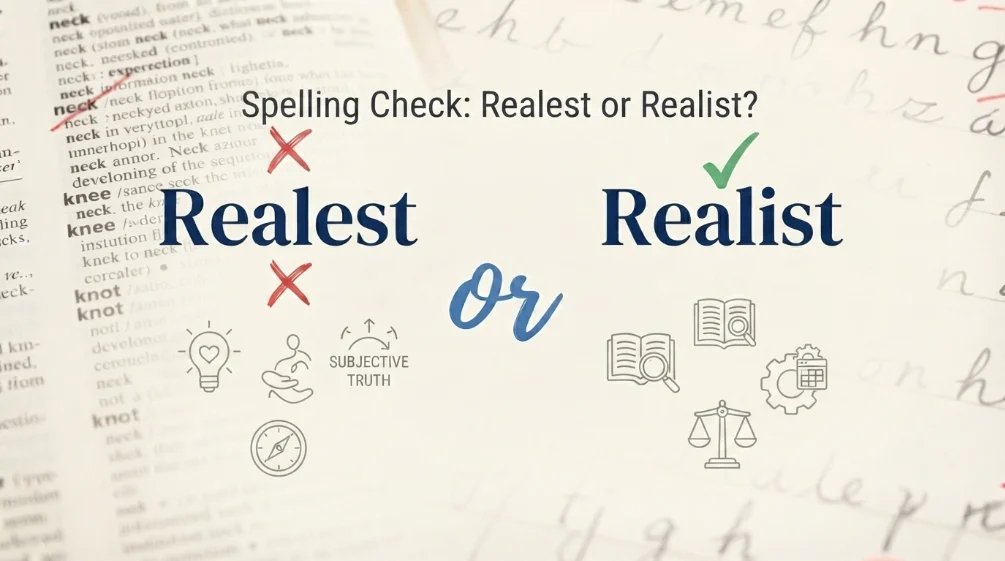
Realest and realist are both correct English words, but they mean different things. Realest is the superlative form of real and means most real or most genuine. Realist is a noun for someone who sees things in a practical way. Example: She is the realest person I know. He is a realist.
The Origin of Realest or Realist
Both words come from the English word real, which traces back through French and Latin roots connected with the idea of something being actual, existing, or genuine.
Realest is formed by adding -est to real. The ending -est is commonly used to make the superlative form of an adjective.
For example:
real → realer → realest
The word realist developed differently. The ending -ist often creates a noun describing a person who follows a particular belief, approach, or way of thinking.
For example:
realism → realist
A realist generally accepts situations as they are and focuses on practical facts rather than ideal hopes.
This difference explains why the two words should not be treated as alternative spellings. They are separate words with separate jobs.
British English vs American English Spelling
There is no major British-versus-American spelling difference between realest and realist. Both forms are accepted in British and American English when used correctly.
| Word | British English | American English | Meaning |
|---|---|---|---|
| Realest | Correct | Correct | Most real or genuine |
| Realist | Correct | Correct | A practical person |
| Realer | Correct | Correct | More real |
| Realism | Correct | Correct | A practical or realistic view |
For example, British writers can say, “She is the realest friend I have,” just as American writers can.
Likewise, “He is a realist” is correct in both varieties of English.
The important issue is not regional spelling. It is meaning and grammar.
Why Is There Confusion Between Realest and Realist?
The confusion usually begins because both words contain the letters real. They also have similar endings, so a quick reader may mistake one for the other.
Typing mistakes can make the problem worse. When someone writes quickly, realest and realist can easily become mixed up, especially when the writer is thinking about the general idea of being real rather than the exact grammatical form.
Pronunciation may also contribute. In fast speech, the endings can sound less distinct than they appear in writing.
Autocorrect and predictive text can create another problem. A phone may suggest one word when the writer intended the other. Search behavior also plays a role. People often type a phrase first and think about grammar later.
The biggest cause, however, is meaning. Both words are connected to the idea of real, but one describes a degree of something, while the other describes a type of person.
Which Spelling Should You Use?
Choose the word based on what you are trying to say.
Use realest when you mean most real, most genuine, or most authentic.
Examples:
- That was the realest conversation we ever had.
- She is the realest person in our group.
- This feels like the realest version of the story.
Use realist when you mean a person who thinks practically and accepts facts.
Examples:
- My brother is a realist.
- A good realist prepares for possible problems.
- She is a realist, so she looks at both the risks and benefits.
For formal writing, make sure the word matches the intended meaning. In casual writing, social media, and conversations, both words can be useful, but replacing one with the other can change your message completely.
Common Mistakes with Realest or Realist
One common mistake is using realist when the writer means most genuine.
Incorrect:
“She is the realist friend I have.”
Better:
“She is the realest friend I have.”
Here, the writer is comparing her with other friends and saying she is the most genuine.
Another mistake is using realest when describing someone’s practical personality.
Incorrect:
“He is the realest about money.”
Better:
“He is a realist about money.”
The second sentence means that he thinks practically about money.
A useful memory trick is simple:
Realest = most real.
Realist = practical person.
If you can replace the word with most genuine, choose realest. If you can replace it with practical person, choose realist.
Realest or Realist in Everyday Examples
The word realest often appears in personal, emotional, and informal writing.
Email:
“Thank you for giving me the realest advice when I needed it.”
Social media:
“You are one of the realest people I have ever met.”
Personal writing:
“That was the realest moment of the entire trip.”
Conversation:
“Be real with me. I want the realest answer you can give.”
In these examples, realest means extremely genuine or the most genuine.
The word realist appears more often when discussing personality, decisions, plans, or beliefs.
Email:
“As a realist, I think we should consider the possible risks.”
News-style writing:
“Analysts described him as a realist who preferred practical solutions.”
Academic writing:
“A realist may focus on evidence rather than ideal outcomes.”
Social media:
“I am a realist. I would rather prepare for problems than pretend they do not exist.”
These examples show why replacing one word with the other can make a sentence sound strange or change its meaning.
SEO Insight – Google Trends & Usage Behavior
People searching for realest or realist usually have one of two intentions. They may be checking whether realest is a valid English word, or they may be trying to understand what realist means.
Searchers also tend to use short comparison phrases when they are unsure about spelling. This is common with words that share the same root but have different endings.
The search phrase can also reveal the user’s purpose. Someone searching “realest meaning” probably wants a definition or example. Someone searching “realist meaning” is more likely looking for a description of a person’s worldview.
Regional behavior does not create a major spelling difference here because both words are standard in British and American English. The main challenge is word choice, not geography.
For writers, the safest approach is to identify the meaning first and then select the word that fits the sentence.
Comparison Table – Realest and Realist Variations
| Word | Meaning | Correct or Incorrect? | Context of Use |
|---|---|---|---|
| Realest | Most real or genuine | Correct | Comparisons, emotions, informal writing |
| Realist | A practical person | Correct | Personality, beliefs, decisions |
| Realer | More real | Correct | Comparing two things |
| Realistic | Based on real facts or practical expectations | Correct | Plans, ideas, situations |
| Real | Genuine, actual, or not false | Correct | General descriptions |
| Realest person | Most genuine person | Correct | Personal or casual writing |
| Realist person | A person who is a realist | Awkward | Better: realist |
The table makes one point clear: realest and realist are not competing spellings. They are different words.
FAQs
Is realest a real word?
Yes, realest is a real and grammatically correct English word. It is the superlative form of the adjective real. It means most real, most genuine, or most authentic. For example, “She is the realest person I know” means she seems especially genuine.
Is realist a real word?
Yes, realist is a standard English word. It usually means a person who looks at situations practically and accepts facts rather than relying only on hopes or ideals. For example, “He is a realist” describes someone with a practical outlook.
What is the difference between realest and realist?
Realest means most real or genuine, while realist means a practical person. They come from the same root word but have different grammatical roles. You can say “the realest friend,” but you would say “he is a realist.”
Is realest grammatically correct?
Yes, realest can be grammatically correct when used as the superlative form of real. It is common in informal and personal writing, especially when describing someone or something as highly genuine. Example: “That was the realest conversation we had.”
When should I use realist?
Use realist when you are talking about someone who approaches life, decisions, or problems in a practical way. It is a noun. For example, “She is a realist who considers both the opportunities and the risks before making a decision.”
Can realest describe a person?
Yes. Realest can describe a person when you mean that person is extremely genuine, honest, or authentic. For example, “He is the realest friend I have.” This usage is especially common in casual conversation, personal writing, and social media.
Is realest more formal than realist?
Neither word is simply more formal than the other because they have different meanings. Realest is often more conversational, while realist is frequently used in formal discussions about personality, philosophy, decisions, and practical thinking. Always choose based on meaning.
Which word is correct: realest or realist?
Both are correct, but they cannot normally replace each other. Choose realest for most real or genuine, and choose realist for a practical person. Remembering this simple difference will help you choose the right word confidently.
Conclusion
The choice between realest or realist becomes easy once you understand their meanings. Realest is the superlative form of real and means most real, genuine, or authentic. Realist is a noun that describes a person who thinks practically and accepts facts as they are. Neither word is a British or American spelling variation of the other.
They are separate words used in different situations. When you mean most genuine, choose realest. When you mean a practical person, choose realist. Keep that simple distinction in mind, and you will avoid one of the most common word-choice mistakes involving the word real.
Read More Related Articles:
Narita or Haneda| Which Tokyo Airport Should You …
Imput or Input | Which Spelling Is Correct? Meaning …
Santorini or Mykonos| Which Greek Island Is Better for Your …