Have you ever wondered whether you are talking to a robot or human while chatting online, getting customer support, or reading content? Today, smart technology has made it harder than ever to tell the difference. Many people search this topic because they want to understand how robots work, what makes humans unique, and where each fits into daily life.
The comparison between robot or human is not about choosing one over the other. Instead, it is about learning their strengths, limits, and roles. This guide explains the key differences in simple words, helping you understand how robots and humans think, learn, create, and solve problems in the modern world.
Quick Answer
A robot is a machine designed to perform tasks by following programmed instructions or artificial intelligence. A human is a living person who can think, feel emotions, learn from life experiences, and make personal decisions. Robots are excellent at speed, accuracy, and repeating tasks, while humans excel in creativity, emotions, judgment, and relationships.
Example:
- A robot can assemble cars in a factory without getting tired.
- A human can design the car, solve unexpected problems, and understand customer needs.
The Origin of the Words Robot and Human
Understanding where these words come from makes their meaning much clearer.
Origin of “Robot”
The word robot comes from the Czech word robota, meaning forced labor or hard work. It first became popular in 1920 through a play called R.U.R. (Rossum’s Universal Robots) by Czech writer Karel Čapek. Since then, the word has been used for machines built to help people perform different tasks.
At first, robots existed mainly in factories. Today, they are found almost everywhere, including hospitals, homes, schools, farms, and even space missions.
Origin of “Human”
The word human comes from the Latin word humanus, meaning belonging to people or having human qualities. It refers to members of the species Homo sapiens, known for intelligence, language, emotions, and the ability to create civilizations.
Unlike robots, humans grow through experience, emotions, education, and social interaction.
Why People Compare Robot and Human
The comparison has become more common because artificial intelligence is improving quickly. Many tasks once done only by humans can now be completed by robots or AI systems. This raises questions such as:
- Can robots replace humans?
- Are robots smarter than people?
- Can robots think like humans?
- What can humans do that robots cannot?
These questions continue to grow as technology becomes part of everyday life.
Robot vs Human: Key Differences
Although robots and humans may perform similar tasks, they work in very different ways.
| Feature | Robot | Human |
|---|---|---|
| Nature | Machine | Living being |
| Emotions | No real emotions | Experiences real emotions |
| Learning | Programmed or AI-based | Learns through life and experience |
| Creativity | Limited to programming | Highly creative |
| Decision Making | Based on rules and data | Uses judgment, feelings, and experience |
| Physical Needs | Needs electricity or power | Needs food, water, sleep, and care |
| Mistakes | Usually follows instructions exactly | Can adapt after making mistakes |
| Communication | Based on programming | Natural language with emotions |
| Innovation | Depends on human design | Can invent new ideas independently |
How Robots Work
Robots collect information through sensors, cameras, microphones, or software. They process this information using computer programs or artificial intelligence before taking action.
For example:
- A robot vacuum detects furniture and cleans around it.
- A warehouse robot moves packages to the correct location.
- A medical robot helps surgeons perform delicate procedures.
Robots work best when tasks are:
- Repetitive
- Dangerous
- Highly accurate
- Time-sensitive
How Humans Think
Humans do much more than process information.
People can:
- Feel happiness and sadness.
- Imagine future possibilities.
- Learn from personal experiences.
- Understand humor and culture.
- Show empathy toward others.
- Make ethical decisions.
These qualities cannot be fully copied by machines.
Why Do People Compare Robots and Humans?
The comparison is becoming more popular for several reasons.
Growth of Artificial Intelligence
AI has become part of everyday life through:
- Voice assistants
- Chatbots
- Self-driving technology
- Smart homes
- Online recommendations
As AI becomes smarter, people naturally ask how close robots are to human intelligence.
Jobs and Automation
Many industries now use robots to improve speed and reduce costs.
Examples include:
- Manufacturing
- Warehousing
- Agriculture
- Healthcare
- Retail
- Banking
This leads many workers to wonder whether robots will replace human jobs.
Online Verification
Many websites ask users to prove they are human.
Examples include:
- Selecting traffic lights in images.
- Solving picture puzzles.
- Clicking “I am not a robot.”
People often search “robot or human” after seeing these verification tests.
Curiosity About the Future
Movies, news stories, and new AI tools have increased public interest.
People often wonder:
- Will robots become conscious?
- Can robots have emotions?
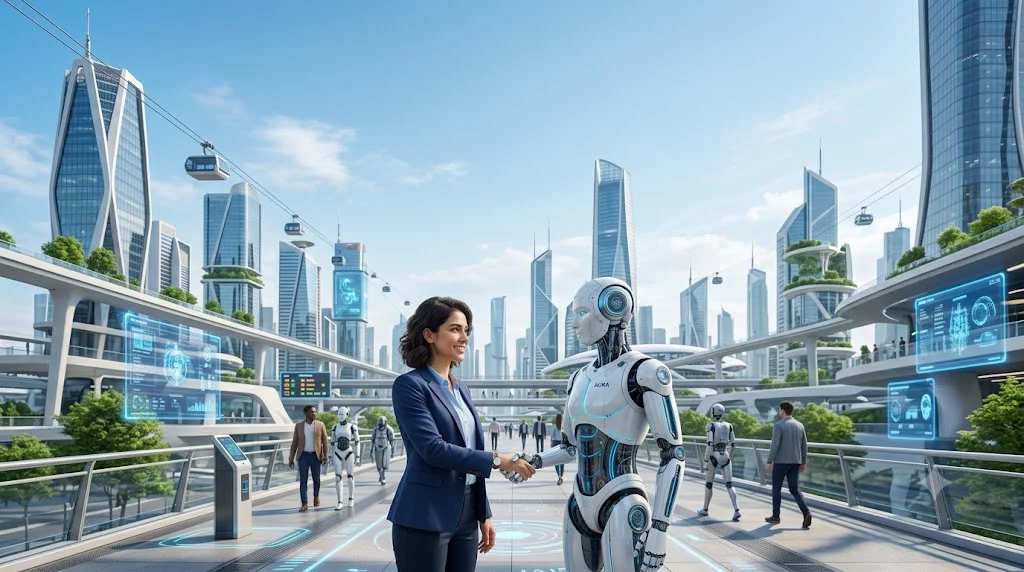
- Will humans and robots work together?
- What will future workplaces look like?
These questions make the topic more popular every year.
Can Robots Think Like Humans?
This is one of the biggest questions people ask.
The short answer is not completely.
Modern robots can:
- Recognize speech.
- Translate languages.
- Solve mathematical problems.
- Play games.
- Analyze huge amounts of data.
- Learn patterns using artificial intelligence.
However, robots still do not truly experience:
- Love
- Fear
- Compassion
- Personal memories
- Dreams
- Moral responsibility
Instead, they generate responses based on data, programming, and learned patterns.
Humans combine logic with feelings, experiences, and imagination. This combination remains one of the biggest differences between people and machines.
Strengths of Robots
Robots offer many advantages in modern life.
Some of their biggest strengths include:
- Work without getting tired.
- Complete repetitive tasks quickly.
- Perform dangerous jobs safely.
- Deliver highly accurate results.
- Handle large amounts of information.
- Operate continuously with little rest.
- Reduce human error in many industries.
- Improve productivity in factories and businesses.
For these reasons, robots have become valuable tools across many fields.
Should You Trust a Robot or a Human?
The answer depends on the task.
Robots are great for jobs that need speed, accuracy, and consistency. Humans are better when feelings, judgment, creativity, or ethics matter.
Here are some examples:
| Situation | Better Choice | Why |
|---|---|---|
| Factory work | Robot | Fast, accurate, and never gets tired |
| Medical diagnosis | Robot + Human | AI can find patterns, but doctors make final decisions |
| Teaching children | Human | Learning also needs care, patience, and encouragement |
| Customer support | Both | Robots answer simple questions, humans solve complex problems |
| Emergency rescue | Human | Quick judgment and compassion are essential |
| Space exploration | Robot | Can safely work in dangerous environments |
In many cases, the best results come when robots and humans work together rather than replacing one another.
Common Misunderstandings About Robots and Humans
Many myths make people think robots are almost the same as humans. Here are some common misunderstandings.
Myth 1: Robots Have Real Feelings
This is false.
A robot can recognize emotional words or facial expressions, but it does not actually feel happiness, sadness, love, or fear.
Myth 2: Robots Will Replace Every Job
Not completely.
Robots can automate repetitive work, but many jobs still require creativity, leadership, communication, and problem-solving.
Myth 3: Robots Can Think Like Humans
Modern AI can process information very quickly, but it does not think through personal experiences or emotions the way humans do.
Myth 4: Robots Never Make Mistakes
Robots can still make mistakes if they receive incorrect data, faulty instructions, or unexpected situations.
Myth 5: Humans Cannot Compete With Robots
Humans remain essential because they can imagine new ideas, build relationships, make ethical choices, and adapt to situations that machines cannot fully understand.
Robot or Human in Everyday Examples
Here are simple examples showing where each plays an important role.
At Home
Robot:
- A robot vacuum cleans the floor.
- A smart lawn mower cuts grass automatically.
Human:
- Parents care for children.
- Family members make important household decisions.
In Healthcare
Robot:
- Helps doctors during surgery.
- Delivers medicine inside hospitals.
Human:
- Diagnoses complex illnesses.
- Comforts and supports patients.
At School
Robot:
- Grades multiple-choice tests.
- Provides learning exercises.
Human:
- Explains difficult topics.
- Inspires students to learn.
At Work
Robot:
- Packs products in warehouses.
- Checks product quality.
Human:
- Creates business strategies.
- Leads teams and solves unexpected problems.
Online
Robot:
- Chatbots answer common questions.
- AI recommends videos or products.
Human:
- Writes original stories.
- Builds friendships.
- Makes important personal decisions.
Search Behavior and User Intent
People search robot or human for many different reasons.
Some want to:
- Learn the difference between robots and humans.
- Understand artificial intelligence.
- Find out if AI can replace people.
- Prepare for school assignments.
- Learn why websites ask users to prove they are human.
- Explore future technology.
- Understand how robots work in everyday life.
Interest in this topic continues to grow as AI becomes more common in homes, businesses, education, and healthcare.
People from many countries search this comparison because technology affects almost everyone today.
Complete Robot vs Human Comparison Table
| Feature | Robot | Human |
|---|---|---|
| Living Being | No | Yes |
| Intelligence | Artificial intelligence or programming | Natural intelligence |
| Emotions | Simulated responses | Real emotions |
| Creativity | Limited | Unlimited potential |
| Learning | Data and programming | Experience and education |
| Communication | Programmed language | Natural conversation |
| Decision Making | Logic and rules | Logic, emotions, and ethics |
| Physical Strength | Can exceed humans | Depends on the individual |
| Speed | Extremely fast for repetitive work | Slower but more flexible |
| Adaptability | Limited by programming | High adaptability |
| Sleep Needed | No | Yes |
| Energy Source | Electricity or batteries | Food, water, and oxygen |
| Best For | Repetitive and dangerous tasks | Creative, social, and complex tasks |
Frequently Asked Questions
1. What is the main difference between a robot and a human?
A robot is a machine built to perform tasks using programming or artificial intelligence. A human is a living person who can think, feel emotions, learn through experience, and make decisions based on knowledge, values, and relationships.
2. Can robots think like humans?
Not completely. Robots can process information, recognize patterns, and complete complex tasks, but they do not possess genuine emotions, self-awareness, or personal life experiences like humans.
3. Will robots replace humans in the future?
Robots will automate many repetitive jobs, but they are unlikely to replace humans entirely. Careers requiring creativity, leadership, empathy, communication, and ethical judgment will continue to depend heavily on people.
4. Which is smarter, a robot or a human?
Robots can calculate and analyze data much faster than humans. However, humans remain better at creativity, emotional understanding, critical thinking, and adapting to completely new situations.
5. Can robots have emotions?
No. Robots can imitate emotional responses through artificial intelligence, but they do not truly experience happiness, sadness, love, fear, or empathy as humans do.
6. Why do websites ask, “Are you a robot?”
Websites use verification tests to protect against automated software that may send spam, steal data, or attack online services. These checks help confirm that a real person is using the website.
7. Can robots make mistakes?
Yes. Robots can produce incorrect results if they receive poor-quality data, faulty programming, damaged hardware, or situations outside their training or design.
8. Can humans and robots work together?
Yes. In many industries, humans and robots already work as teams. Robots handle repetitive or risky tasks, while humans provide creativity, decision-making, and emotional understanding, creating better overall results.
Conclusion
The comparison between robot or human is not about deciding which is better. Each has unique strengths that make it valuable. Robots excel at speed, precision, and repetitive work, while humans bring creativity, emotions, ethical thinking, and life experience. As technology continues to advance, robots will become even more helpful in daily life, but they will still rely on human guidance and innovation. Understanding these differences helps us use technology wisely and appreciate the abilities that make people truly unique. The future is not about robots replacing humans it is about both working together to build a smarter and more efficient world.
Read More Related Articles:
Babbel or Duolingo |Which Language Learning App Is …
Corn or Wart | What’s the Difference and How Can You Tell …