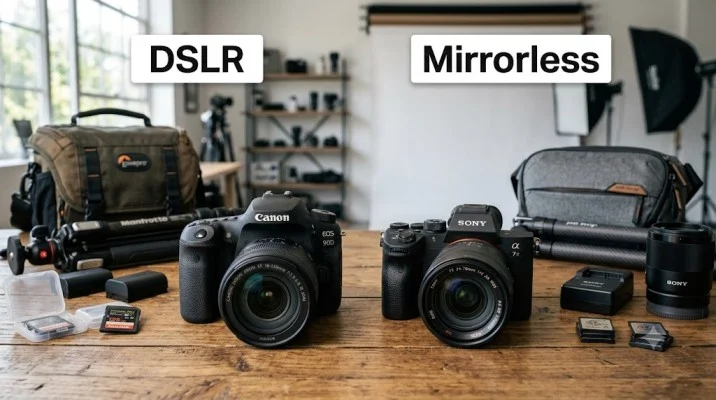
Buying a new camera often feels exciting until you compare dozens of models and keep seeing dslr or mirrorless everywhere. Many beginners, travelers, students, and even experienced photographers face the same confusion because both camera types look capable, yet each promises different advantages. With so much conflicting advice online, it is easy to feel unsure about which one truly fits your needs.
Thousands of people search for dslr or mirrorless because they want a clear, trustworthy explanation before spending their money. This guide will break down the key differences, explain why the comparison matters, provide practical examples, and help you avoid common buying mistakes. By the end, you’ll have the knowledge to make a more confident decision, so keep reading.
Quick Answer
If you want the short answer, both DSLR and mirrorless cameras can produce excellent photos and videos. A DSLR is known for its long battery life, optical viewfinder, and wide lens selection. A mirrorless camera is smaller, lighter, faster, and offers advanced autofocus and video features. For most new buyers today, a mirrorless camera is the better long-term choice, while DSLRs still remain a great value for many photographers.
What Is a DSLR Camera?
A DSLR (Digital Single-Lens Reflex) camera uses a mirror inside the camera body. When light enters the lens, it reflects off this mirror into an optical viewfinder, allowing you to see exactly what the lens sees. When you press the shutter button, the mirror flips up, and the camera sensor captures the image.
For many years, DSLRs were the standard choice for professionals and photography enthusiasts because they offered outstanding image quality, fast performance, and reliable battery life.
Key Features of DSLR Cameras
- Optical viewfinder with a real-world view
- Excellent battery life
- Large selection of lenses and accessories
- Comfortable grip for long shooting sessions
- Strong performance in many photography styles
- Durable camera bodies for outdoor use
Best For
- Wildlife photography
- Sports photography
- Wedding photography
- Studio work
- Users who prefer an optical viewfinder
What Is a Mirrorless Camera?
A mirrorless camera removes the mirror mechanism found inside a DSLR. Instead, light travels directly to the image sensor. The camera then displays the scene on an electronic viewfinder or the rear LCD screen.
Without the mirror system, manufacturers can build cameras that are smaller, lighter, and packed with modern technology.
Mirrorless cameras have become the preferred choice for many photographers because they combine excellent image quality with advanced autofocus, high-speed shooting, and powerful video features.
Key Features of Mirrorless Cameras
- Compact and lightweight design
- Electronic viewfinder with live exposure preview
- Fast autofocus with subject tracking
- High-speed continuous shooting
- Advanced video recording features
- Silent electronic shutter options
Best For
- Travel photography
- Street photography
- Content creators
- Video production
- Everyday photography
DSLR vs Mirrorless: Key Differences
Although both camera types can create beautiful images, they differ in several important ways.
| Feature | DSLR | Mirrorless |
|---|---|---|
| Size | Larger | Smaller |
| Weight | Heavier | Lighter |
| Viewfinder | Optical | Electronic |
| Autofocus | Excellent | Usually faster |
| Battery Life | Longer | Shorter |
| Burst Speed | Fast | Often faster |
| Video Features | Good | Excellent |
| Silent Shooting | Limited | Available |
| Live Exposure Preview | No | Yes |
| Future Development | Slowing | Growing rapidly |
The best choice depends on how and where you plan to use your camera.
Image Quality: Is There a Difference?
One of the biggest myths is that mirrorless cameras automatically produce better image quality than DSLRs.
In reality, image quality depends more on the sensor size, lens quality, lighting, and photographer’s skills than the camera type itself.
For example:
- A modern DSLR with a high-quality lens can produce stunning images.
- A mirrorless camera with the same sensor size can deliver nearly identical results.
Factors That Affect Image Quality
- Sensor size
- Lens quality
- Lighting conditions
- Camera settings
- Photographer’s technique
If two cameras use similar sensors, most people will not notice any meaningful difference in photo quality.
Autofocus Performance
Autofocus technology has improved dramatically over the last few years, especially in mirrorless cameras.
DSLR Autofocus
DSLR cameras use a dedicated autofocus system when looking through the optical viewfinder. They perform very well for sports and wildlife photography, especially professional models.
Advantages include:
- Reliable tracking
- Fast focus in bright conditions
- Proven technology
Mirrorless Autofocus
Mirrorless cameras use autofocus directly on the image sensor. This allows the camera to recognize and track subjects with incredible accuracy.
Modern mirrorless cameras can detect:
- Human eyes
- Animal eyes
- Birds
- Cars
- Motorcycles
- Airplanes
Many cameras continue tracking your subject even while it moves across the frame.
Which Wins?
For most users today, mirrorless cameras offer more advanced autofocus, especially for portraits, wildlife, sports, and video recording.
Video Recording Comparison
Video has become one of the biggest reasons people choose mirrorless cameras.
Many modern mirrorless models support:
- 4K recording
- 6K recording
- 8K recording
- Slow-motion video
- Better autofocus during recording
- Professional video profiles
DSLR cameras can still record excellent video, but many older models have slower autofocus while filming.
If creating YouTube videos, online courses, or social media content is important, mirrorless cameras usually provide a smoother experience.
Battery Life Comparison
Battery life is one area where DSLR cameras still have a clear advantage.
Because a DSLR uses an optical viewfinder instead of an electronic display most of the time, it consumes much less power.
Typical DSLR Performance
Many DSLR cameras can capture:
- 800 photos
- 1,000 photos
- Sometimes over 1,500 photos on one battery
Typical Mirrorless Performance
Mirrorless cameras constantly power:
- The image sensor
- Electronic viewfinder
- Rear LCD screen
This means batteries usually last for fewer photos before needing a recharge.
Fortunately, many newer mirrorless cameras now support:
- USB charging
- USB power banks
- Spare batteries
- Fast charging
For travel or long events, carrying an extra battery usually solves the problem.
Lens Selection
Lenses are just as important as the camera body.
DSLR Lens Options
Because DSLR cameras have been around for decades, they offer a huge selection of lenses, including:
- Budget lenses
- Professional lenses
- Macro lenses
- Telephoto lenses
- Wide-angle lenses
- Third-party options
Buying used DSLR lenses can also save a lot of money.
Mirrorless Lens Options
Mirrorless lens systems have expanded quickly.
Today, major camera brands offer:
- Portrait lenses
- Landscape lenses
- Wildlife lenses
- Sports lenses
- Cinema lenses
- Compact travel lenses
Many photographers can also use older DSLR lenses with adapters while keeping autofocus support.
Size and Weight
One of the first things people notice when comparing a DSLR and a mirrorless camera is their size.
A DSLR needs space for the mirror and optical viewfinder, making the camera body larger and heavier. A mirrorless camera removes this mirror system, allowing manufacturers to create more compact designs.
DSLR
Pros
- Comfortable grip for large hands
- Better balance with long telephoto lenses
- Solid build for extended shooting
Cons
- Heavier to carry all day
- Takes more space in a camera bag
Mirrorless
Pros
- Lightweight
- Easy to pack for travel
- Comfortable for everyday use
- Fits into smaller bags
Cons
- Small grips may feel less comfortable with large lenses
If you travel often or carry your camera for hours, a mirrorless camera is usually easier to handle.
Optical vs Electronic Viewfinder
Another major difference is how you see your subject before taking a photo.
DSLR Optical Viewfinder
A DSLR lets you look directly through the lens using mirrors and glass.
Advantages
- Natural view
- No display lag
- Works well in bright sunlight
- Uses very little battery power
Mirrorless Electronic Viewfinder
A mirrorless camera shows a digital preview from the image sensor.
Advantages
- Preview exposure before taking the photo
- Shows white balance instantly
- Displays focus peaking
- Displays histograms
- Helpful in very dark scenes
For beginners, seeing the final exposure before pressing the shutter often makes learning photography much easier.
Low-Light Performance
Many people think one camera type always performs better in low light, but that is not entirely true.
Low-light performance mainly depends on:
- Sensor size
- Lens quality
- Image processor
- Camera settings
A full-frame DSLR and a full-frame mirrorless camera with similar sensors can produce very similar results.
However, modern mirrorless cameras often include improved image processing and autofocus that help in dark environments.
DSLR or Mirrorless for Beginners
If you are buying your first camera, mirrorless is often the easier choice.
Why Beginners Like Mirrorless
- Simple menus
- Live exposure preview
- Excellent autofocus
- Helpful shooting guides
- Smaller body
- Better video features
Why Some Beginners Still Choose DSLR
- Lower used prices
- Longer battery life
- Huge selection of affordable used lenses
If your budget is limited, a used DSLR can still be an excellent starting point.
Best Camera for Travel Photography
Travel photographers usually want equipment that is easy to carry without sacrificing image quality.
Mirrorless Wins for Travel
Reasons include:
- Lightweight body
- Compact lenses
- Silent shooting
- Easy charging with USB
- Better video recording
A smaller camera also attracts less attention when exploring busy cities.
Best Camera for Wildlife Photography
Wildlife photography requires speed, reach, and reliable autofocus.
DSLR Strengths
- Excellent battery life
- Comfortable handling with long lenses
- Reliable autofocus on professional models
Mirrorless Strengths
- Animal eye detection
- Fast burst shooting
- Silent shutter
- Better subject tracking
Modern mirrorless cameras have become extremely popular among wildlife photographers because of their intelligent autofocus.
Best Camera for Sports Photography
Sports photography demands fast shooting speeds and accurate tracking.
Mirrorless cameras now offer:
- High burst rates
- Advanced subject recognition
- Continuous autofocus
- Silent shooting
Professional DSLRs still perform very well, but many sports photographers are moving to mirrorless systems because of their improved tracking technology.
Best Camera for Portrait Photography
Portrait photographers want sharp eyes, beautiful background blur, and accurate colors.
Mirrorless cameras provide:
- Eye detection autofocus
- Face tracking
- Live exposure preview
- Silent shooting
DSLR cameras also produce outstanding portraits, especially when paired with high-quality portrait lenses.
The final image depends more on the lens and lighting than on the camera type.
Price Comparison
Cost is often one of the biggest deciding factors.
| Category | DSLR | Mirrorless |
|---|---|---|
| Entry-Level Cameras | Usually lower | Slightly higher |
| Used Market | Excellent value | Growing quickly |
| Professional Models | Competitive | Premium options available |
| Lens Prices | Many affordable choices | Expanding range of prices |
If you are looking for the best value, used DSLR equipment can be a smart investment.
If you want the latest technology, mirrorless systems offer more future upgrade options.
DSLR Pros and Cons
Pros
- Excellent battery life
- Comfortable grip
- Large used market
- Wide lens selection
- Optical viewfinder
- Great value
Cons
- Larger body
- Heavier weight
- Slower technology updates
- Bulkier travel setup
Mirrorless Pros and Cons
Pros
- Lightweight
- Fast autofocus
- Excellent video
- Silent shooting
- Live exposure preview
- Advanced subject tracking
Cons
- Shorter battery life
- Higher prices for some models
- Electronic viewfinder uses more power
Which Camera Should You Buy?
There is no single best camera for everyone.
Choose a DSLR if you:
- Want longer battery life
- Prefer an optical viewfinder
- Have a limited budget
- Plan to buy used equipment
- Already own DSLR lenses
Choose a Mirrorless camera if you:
- Want the latest technology
- Record videos often
- Travel frequently
- Need advanced autofocus
- Want a lighter camera
The best camera is the one that matches your photography style, budget, and future goals.
Comparison Table
| Feature | DSLR | Mirrorless |
|---|---|---|
| Mirror Mechanism | Yes | No |
| Viewfinder | Optical | Electronic |
| Body Size | Larger | Smaller |
| Weight | Heavier | Lighter |
| Battery Life | Longer | Shorter |
| Autofocus | Very Good | Excellent |
| Video Features | Good | Excellent |
| Silent Shooting | Limited | Yes |
| Travel Friendly | Good | Excellent |
| Future Development | Limited | Rapidly Growing |
Frequently Asked Questions
Is a mirrorless camera better than a DSLR?
For many photographers, yes. Mirrorless cameras offer faster autofocus, smaller bodies, and stronger video features. However, DSLRs still provide excellent image quality, longer battery life, and outstanding value, making them a great choice for many users.
Do professionals still use DSLR cameras?
Yes. Many professional photographers continue using DSLRs because they are reliable, durable, and compatible with high-quality lenses. At the same time, many professionals have switched to mirrorless cameras for their advanced autofocus and lighter designs.
Is image quality better on mirrorless cameras?
Not always. Image quality depends more on the sensor, lens, lighting, and camera settings than on whether the camera is DSLR or mirrorless. Two cameras with similar sensors can produce nearly identical images.
Why are mirrorless cameras becoming more popular?
Mirrorless cameras combine compact designs with modern technology. Features such as eye-detection autofocus, silent shooting, fast burst speeds, and advanced video recording make them attractive for both beginners and professionals.
Are DSLR cameras becoming outdated?
DSLR cameras are no longer the main focus for many manufacturers, but they remain highly capable tools. Millions of photographers still use them successfully for portraits, wildlife, sports, landscapes, and commercial work.
Which camera is better for beginners?
Mirrorless cameras are generally easier for beginners because they provide live exposure previews, modern autofocus, and helpful shooting features. However, an affordable used DSLR is still an excellent option for learning photography.
Conclusion
Choosing between DSLR or mirrorless does not have to be difficult. Both camera systems can produce stunning photos and professional-quality results. A DSLR remains an excellent option if you value long battery life, a traditional shooting experience, and affordable used equipment. A mirrorless camera, on the other hand, offers faster autofocus, lighter designs, and modern features that suit today’s photographers and content creators. Instead of asking which camera is universally better, consider your budget, photography style, travel needs, and future plans. When you choose a camera that fits how you like to shoot, you will enjoy photography more and capture better images with confidence.
Read More Related Articles:
DC or Marvel | Which Universe Is Better The Ultimate …
Imput or Input | Which Spelling Is Correct? Meaning …
Sulphur or Sulfur | Why Both Spellings Exist and Which Is Right …