A small tear that refuses to heal or bleeding after a bowel movement can leave anyone feeling worried. Many people search for fissure or cancer because the symptoms can seem similar at first. Pain, bleeding, and discomfort often lead people to wonder if they have a simple anal fissure or something more serious like anal cancer.
The good news is that these conditions are very different in most cases. Understanding the signs, causes, and warning symptoms can help you know when home care is enough and when you should see a doctor. This guide explains the differences in simple language, helping you recognize the symptoms and understand what steps to take next.
Quick Answer
An anal fissure is a small tear in the lining of the anus, usually caused by passing hard stools or constipation. Anal cancer is a rare disease where abnormal cells grow in the tissues of the anus. Although both may cause bleeding, they have different causes, symptoms, and treatments. Persistent symptoms should always be checked by a healthcare professional.
What Is an Anal Fissure?
An anal fissure is a small cut or tear in the thin skin around the opening of the anus. It commonly develops after passing a large or hard stool.
Most fissures are not dangerous and often heal within a few weeks with proper care.
Common Symptoms of an Anal Fissure
- Sharp pain during bowel movements
- Burning pain that lasts for minutes or hours afterward
- Bright red blood on toilet paper
- A visible crack near the anus
- Mild itching or irritation
- Fear of having another bowel movement because of pain
The pain from an anal fissure is usually severe but happens mainly during or after passing stool.
What Is Anal Cancer?
Anal cancer develops when abnormal cells begin growing in the tissues of the anus. It is much less common than an anal fissure but requires early diagnosis and treatment.
Unlike a fissure, anal cancer usually does not begin because of constipation or injury. Instead, it develops from abnormal cell changes over time.
Common Symptoms of Anal Cancer
- Rectal bleeding
- Persistent pain around the anus
- A lump near the anus
- Itching that does not improve
- Unusual discharge
- Swollen lymph nodes in the groin
- Changes in bowel habits
- Feeling of fullness in the anal area
Some people have very mild symptoms at first, making regular medical evaluation important if symptoms continue.
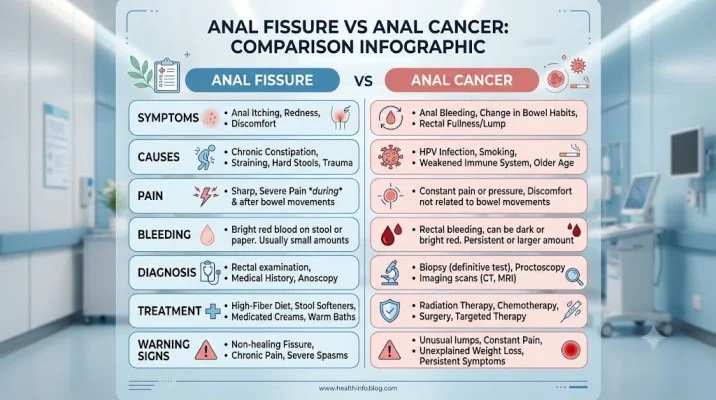
Fissure or Cancer: Key Differences
Although these conditions can share a few symptoms, several important differences help doctors tell them apart.
| Feature | Anal Fissure | Anal Cancer |
|---|---|---|
| Cause | Tear in the skin | Abnormal cell growth |
| Pain | Usually severe during bowel movements | May be constant or gradually increase |
| Bleeding | Bright red blood after stool | Bleeding may occur at any time |
| Lump | Usually absent | Lump may be present |
| Healing | Often improves within weeks | Does not heal without treatment |
| Risk Level | Usually not serious | Serious medical condition |
These differences are helpful, but only a healthcare provider can make a proper diagnosis.
Symptoms Comparison
Understanding how the symptoms differ can reduce unnecessary worry while helping you recognize warning signs.
Pain
Anal Fissure
- Very sharp
- Starts during bowel movement
- May continue for several hours
- Often improves between bowel movements
Anal Cancer
- May begin as mild discomfort
- Can become constant
- May not be linked to bowel movements
- Often worsens over time
Bleeding
Anal Fissure
- Bright red blood
- Small amount
- Usually appears on toilet paper
Anal Cancer
- Bleeding may happen more often
- Can occur without bowel movements
- Sometimes mixed with discharge
Lump
Anal Fissure
Most people do not develop a lump, although a small skin tag can sometimes form near a chronic fissure.
Anal Cancer
A noticeable lump or thickened area is more common and should always be examined by a doctor.
Causes of an Anal Fissure
Several everyday problems can lead to an anal fissure.
Common Causes
- Constipation
- Passing hard stools
- Chronic diarrhea
- Straining during bowel movements
- Childbirth
- Inflammatory bowel disease
- Repeated irritation
Many fissures occur after a single difficult bowel movement.
Causes of Anal Cancer
Anal cancer develops because cells in the anal canal begin growing abnormally.
Possible Risk Factors
- Human papillomavirus (HPV) infection
- Smoking
- Weakened immune system
- Older age
- History of certain infections
- Previous radiation treatment near the pelvic area
Having one or more risk factors does not mean someone will develop anal cancer, but it may increase the chance.
Can a Fissure Turn Into Cancer?
This is one of the most common questions people ask.
A typical anal fissure does not become cancer.
However, if symptoms continue for many weeks, return repeatedly, or fail to improve despite treatment, doctors may recommend additional testing to make sure another condition is not causing the symptoms.
Persistent bleeding should never be ignored simply because it seems like a fissure.
Warning Signs That Need Medical Attention
Seek medical evaluation if you notice:
- Bleeding that continues for several weeks
- A lump around the anus
- Unexplained weight loss
- Persistent discharge
- Pain that keeps getting worse
- Difficulty controlling bowel movements
- Swollen glands in the groin
- Symptoms that do not improve with treatment
Early evaluation can identify the cause and allow treatment to begin sooner if needed.
How Doctors Tell the Difference
Doctors usually begin with a detailed discussion of your symptoms and medical history.
They may also perform:
- Physical examination
- Visual inspection of the anal area
- Digital rectal examination
- Anoscopy
- Biopsy if an abnormal growth is found
- Imaging tests when necessary
A biopsy is the only way to confirm anal cancer.
Treatment for an Anal Fissure
Most anal fissures heal without surgery. The main goal is to reduce pain, soften stools, and allow the tear to heal naturally.
Home Treatment
- Drink plenty of water every day.
- Eat more fiber from fruits, vegetables, and whole grains.
- Avoid straining during bowel movements.
- Take warm sitz baths for 10–15 minutes several times a day.
- Keep the area clean and dry.
- Stay physically active to support healthy digestion.
Medical Treatment
If home care does not help, a doctor may recommend:
- Stool softeners
- Fiber supplements
- Prescription creams that relax the anal muscles
- Pain-relieving ointments
- Botulinum toxin (Botox) injections in some cases
Surgery
Chronic fissures that do not heal may require a minor surgical procedure called lateral internal sphincterotomy. This procedure reduces pressure on the muscle, allowing the tear to heal.
Most people recover well after treatment.
Treatment for Anal Cancer
Treatment depends on the cancer stage, its size, and the person’s overall health.
Common treatments include:
- Chemotherapy
- Radiation therapy
- Surgery in selected cases
- Immunotherapy for some advanced cancers
- Regular follow-up examinations after treatment
Doctors often combine chemotherapy and radiation because this approach can be very effective while preserving normal anal function.
Early diagnosis usually leads to better treatment outcomes.
Recovery Expectations
Recovery is different for each condition.
| Condition | Typical Recovery |
|---|---|
| Anal Fissure | Often heals within a few weeks with proper care |
| Chronic Fissure | May require prescription medicine or surgery |
| Anal Cancer | Recovery depends on the cancer stage and treatment plan |
Following your healthcare provider’s advice can improve healing and reduce complications.
Can You Prevent These Conditions?
While not every case can be prevented, healthy habits may lower your risk.
To Help Prevent Anal Fissures
- Eat a high-fiber diet.
- Drink enough water daily.
- Avoid constipation.
- Exercise regularly.
- Do not delay bowel movements.
- Avoid excessive straining.
To Help Reduce the Risk of Anal Cancer
- Consider HPV vaccination if recommended.
- Avoid smoking.
- Practice safer sexual health.
- Attend regular medical checkups if you have risk factors.
- Seek medical advice for ongoing anal symptoms.
Common Myths About Fissure or Cancer
Myth 1: Every anal fissure is cancer.
Fact: Most anal fissures are simple tears caused by constipation or hard stools.
Myth 2: If there is bleeding, it must be cancer.
Fact: Bleeding is much more commonly caused by fissures or hemorrhoids than by anal cancer.
Myth 3: Pain always means cancer.
Fact: Anal fissures usually cause much sharper pain than anal cancer.
Myth 4: A fissure eventually becomes cancer.
Fact: An ordinary anal fissure does not turn into cancer.
Myth 5: If symptoms improve, there is nothing to worry about.
Fact: Symptoms that return repeatedly or never completely heal should still be evaluated by a healthcare professional.
Fissure or Cancer in Everyday Situations
At Home
“I noticed bright red blood after passing a hard stool. My doctor confirmed it was an anal fissure.”
At Work
“I had ongoing discomfort for several weeks, so I scheduled a medical appointment to find the cause.”
In a Health Article
“Persistent anal bleeding should always be evaluated because several conditions can cause similar symptoms.”
On Social Media
“Don’t ignore ongoing bleeding. It may be a fissure, but only a healthcare professional can make the correct diagnosis.”
In a Medical Discussion
“Although anal fissures and anal cancer can share symptoms, their causes and treatments are completely different.”
Comparison Table: Fissure vs Cancer
| Feature | Anal Fissure | Anal Cancer |
|---|---|---|
| What it is | Small tear in the anal lining | Cancer that develops in anal tissue |
| Main Cause | Hard stool or injury | Abnormal cell growth |
| Pain | Sharp during bowel movements | Often constant or gradually worsening |
| Bleeding | Bright red after bowel movement | May occur at different times |
| Lump | Usually absent | May be present |
| Healing | Often heals with treatment | Requires medical treatment |
| Seriousness | Usually mild | Potentially life-threatening if untreated |
| Medical Evaluation | Needed if symptoms persist | Always required |
Frequently Asked Questions
Can an anal fissure be mistaken for cancer?
Yes. Both conditions may cause bleeding and discomfort. However, a fissure usually causes severe pain during bowel movements, while cancer often causes symptoms that gradually worsen or do not heal.
How do doctors know if it is a fissure or cancer?
Doctors perform a physical examination and may recommend an anoscopy, imaging tests, or a biopsy if they find an abnormal growth. A biopsy is the only way to confirm anal cancer.
Can an anal fissure become cancer?
No. A typical anal fissure does not develop into cancer. However, persistent symptoms should be checked to rule out other conditions.
Is bleeding always a sign of anal cancer?
No. Bright red bleeding is commonly caused by fissures or hemorrhoids. Even so, bleeding that continues or returns frequently should always be evaluated by a healthcare professional.
What are the first warning signs of anal cancer?
Common early signs include persistent bleeding, a lump near the anus, ongoing pain, itching, unusual discharge, and changes in bowel habits.
When should I see a doctor?
You should seek medical advice if symptoms last longer than a few weeks, become worse, return repeatedly, or are accompanied by a lump, unexplained weight loss, or swollen glands.
Can constipation cause an anal fissure?
Yes. Passing hard or large stools is one of the most common causes of anal fissures because it can tear the delicate lining of the anus.
Which condition is more common?
Anal fissures are much more common than anal cancer. Most people experiencing pain after bowel movements are more likely to have a fissure than cancer, but only a medical examination can provide a diagnosis.
Conclusion
Many people search for fissure or cancer because both conditions can cause bleeding and discomfort. Although they may seem similar at first, they are very different. An anal fissure is usually a small tear caused by hard stools or constipation and often heals with proper care. Anal cancer is much less common but requires prompt medical attention. If your symptoms continue, worsen, or do not improve after treatment, do not ignore them. Early evaluation by a healthcare professional can provide the correct diagnosis, reduce anxiety, and ensure you receive the right treatment as soon as possible.
Read More Related Articles:
Parent or Guardian | Everything You Need to Know Before Filling …
Crain or Crane | Which Spelling Is Correct? Meaning, Usage …