Is your scalp itchy, and you’re not sure whether it’s dandruff or lice? You are not alone. Many people search for dandruff or lice because both can cause itching and small white flakes or specks in the hair. At first glance, they may look similar, but they are very different conditions. Dandruff is a common scalp problem caused by dry skin or excess oil, while lice are tiny insects that live on the scalp and feed on blood.
Knowing the difference helps you choose the right treatment and avoid unnecessary worry. This guide explains how to identify each condition, compare their symptoms, and decide what to do next.
Quick Answer
If the white flakes fall off your hair easily, you most likely have dandruff. If the tiny white or brown eggs stick tightly to your hair and your scalp itches badly, you may have head lice.
Example:
- White flakes on your shoulders after brushing your hair = Dandruff
- Tiny eggs attached firmly to hair strands behind the ears or near the neck = Lice
In short, dandruff is a scalp condition, while lice are tiny insects that spread from person to person.
What Is Dandruff?
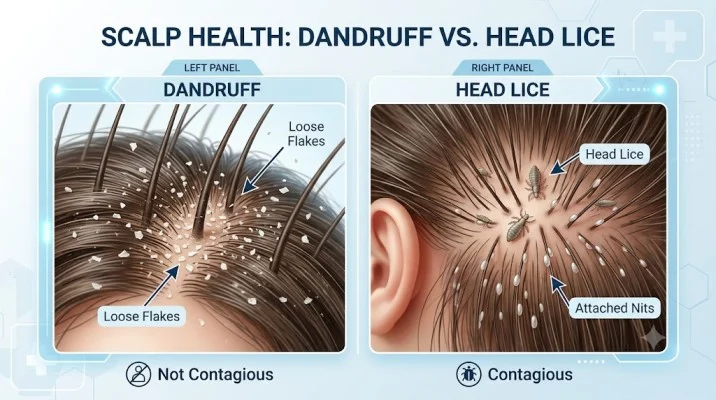
Dandruff is a common scalp condition that causes the skin on your head to flake. The flakes are usually white or yellow and may fall onto your shoulders.
Although dandruff can make your scalp itchy, it is not contagious. You cannot catch dandruff from another person.
Common Signs of Dandruff
- White or yellow flakes
- Dry or oily scalp
- Mild to moderate itching
- Flakes fall easily when touched
- Redness in some cases
What Causes Dandruff?
Several factors can lead to dandruff, including:
- Dry skin
- Oily scalp
- A yeast called Malassezia
- Sensitive skin
- Not washing hair often enough
- Reaction to hair products
Some people notice dandruff becomes worse during winter because cold weather dries out the skin.
What Are Head Lice?
Head lice are tiny insects that live in human hair. They feed on small amounts of blood from the scalp several times a day.
Unlike dandruff, lice are contagious. They spread through close head-to-head contact and sometimes by sharing personal items like hats, brushes, or hair accessories.
Adult lice are small, wingless insects that move quickly through the hair, making them difficult to see.
Signs of Head Lice
- Intense itching
- Tickling feeling on the scalp
- Tiny white or brown eggs (nits)
- Live insects moving through hair
- Small red bite marks
- Trouble sleeping because lice are more active at night
The Origin of the Terms “Dandruff” and “Lice”
Understanding the history of these words helps explain their meanings.
Origin of the Word “Dandruff”
The word dandruff comes from old English words that referred to scaly skin or small flakes. Over time, it became the common name for the white flakes that appear on the scalp.
Today, doctors use the word to describe mild scalp flaking caused by dry skin, oily skin, or other scalp conditions.
Origin of the Word “Lice”
The word lice is the plural form of louse. It comes from Old English and has been used for hundreds of years to describe tiny insects that live on people or animals.
Head lice have affected humans throughout history and continue to be common, especially among school-aged children.
Why Do People Confuse Dandruff and Lice?
Many people mistake dandruff for lice because both can make the scalp itchy and leave white particles in the hair.
However, they are very different.
1. White Flakes Look Like Nits
Dandruff flakes are white and can resemble lice eggs from a distance.
2. Both Cause an Itchy Scalp
Itching is one of the most common symptoms of both conditions.
3. Parents Often Check Children’s Hair
When a child scratches their head, parents naturally worry about lice, even if the child only has dandruff.
4. White Specks Are Hard to Identify
Without looking closely, it is difficult to know whether the white particles are flakes, dirt, or lice eggs.
5. Internet Searches Increase Confusion
Many people search online after noticing an itchy scalp, leading to comparisons between dandruff and lice.
Key Differences Between Dandruff and Lice
Although dandruff and lice may appear similar at first, they have different causes, symptoms, and treatments.
| Feature | Dandruff | Head Lice |
|---|---|---|
| Cause | Dry skin, oily skin, yeast, irritation | Tiny insects that feed on blood |
| Contagious | No | Yes |
| White Particles | Loose flakes | Eggs (nits) attached to hair |
| Itching | Mild to moderate | Often severe |
| Movement | Flakes do not move | Live lice crawl |
| Hair Attachment | Falls off easily | Sticks firmly to hair |
| Location | Entire scalp | Behind ears and neck most often |
| Treatment | Anti-dandruff shampoo | Lice treatment products and nit comb |
| Spread | Does not spread between people | Spreads through close contact |
| Risk | Usually harmless | Needs treatment to stop spreading |
How Can You Tell the Difference?
A simple test can often help.
If It Is Dandruff
- The flakes brush away easily.
- They fall onto your clothes.
- The scalp may feel dry or oily.
- No insects are visible.
If It Is Lice
- The white eggs stay attached to the hair.
- They are difficult to remove with your fingers.
- Live insects may be seen crawling.
- Itching is usually much stronger.
A fine-toothed lice comb can help identify live lice or eggs more easily.
Can You Have Dandruff and Lice at the Same Time?
Yes. Although uncommon, a person can have both dandruff and head lice at the same time.
For example:
- A child may already have dandruff and later catch lice at school.
- Someone with an oily scalp can still become infected with lice through close contact.
Having dandruff does not protect you from lice, and having lice does not cause dandruff.
Because both conditions may occur together, checking the scalp carefully is important before starting treatment.
When Should You See a Doctor?
Most cases of dandruff improve with medicated shampoos, while lice usually clear with proper lice treatments.
However, you should see a healthcare professional if:
- The itching becomes severe.
- The scalp develops sores or infection.
- Over-the-counter treatments do not work.
- You continue finding live lice after treatment.
- The scalp becomes swollen or painful.
- The condition keeps coming back.
A doctor can examine your scalp and recommend the most suitable treatment if the cause is unclear.
Dandruff or Lice?
Symptoms of Dandruff vs. Lice
Although dandruff and head lice can both make your scalp itch, their symptoms are different. Looking closely at your scalp and hair can help you tell them apart.
Symptoms of Dandruff
People with dandruff often notice:
- White or yellow flakes on the scalp
- Flakes on clothing, especially dark shirts
- Mild or moderate itching
- Dry or oily patches on the scalp
- Redness if the scalp becomes irritated
The flakes are usually loose and fall away when you brush or shake your hair.
Symptoms of Head Lice
People with head lice may experience:
- Strong itching that gets worse over time
- A tickling or crawling feeling on the scalp
- Tiny white, tan, or brown eggs attached to hair
- Live lice moving through the hair
- Small red bumps from bites
- Difficulty sleeping because lice are more active at night
Unlike dandruff flakes, lice eggs stay firmly attached to the hair shaft.
What Causes Dandruff?
Dandruff is not caused by poor hygiene. Even people who wash their hair regularly can develop it.
Common causes include:
Dry Skin
Dry skin is one of the most common reasons for dandruff. It often becomes worse during cold weather.
Oily Scalp
Too much oil can lead to irritation and flaking.
Natural Yeast
A yeast called Malassezia lives on most people’s scalps. In some people, it grows too much and causes extra skin cells to shed.
Skin Conditions
Certain skin problems can also lead to dandruff, including:
- Seborrheic dermatitis
- Eczema
- Psoriasis
Hair Products
Some shampoos, dyes, or styling products may irritate the scalp and cause flakes.
What Causes Head Lice?
Head lice are caused by tiny insects called Pediculus humanus capitis. They survive by feeding on blood from the scalp.
Lice are not a sign of dirty hair. They can live in both clean and dirty hair.
Common Ways Lice Spread
- Head-to-head contact
- Children playing closely together
- Sharing hats
- Sharing brushes
- Sharing hair clips
- Sharing scarves
- Sleeping close together
Lice cannot jump or fly. They only crawl.
How Do Doctors Diagnose Dandruff or Lice?
Most cases can be identified by looking closely at the scalp.
Diagnosing Dandruff
A healthcare provider may look for:
- Loose flakes
- Dry skin
- Oily patches
- Redness
- Signs of skin irritation
Usually, no special tests are needed.
Diagnosing Lice
To diagnose lice, a healthcare provider may:
- Examine the scalp under bright light
- Use a fine-toothed lice comb
- Look behind the ears
- Check the back of the neck
- Search for live lice and eggs
Finding live lice confirms the diagnosis.
Best Treatments for Dandruff
The right treatment depends on the cause.
Anti-Dandruff Shampoo
Many shampoos contain ingredients that reduce flakes.
Common ingredients include:
- Zinc pyrithione
- Selenium sulfide
- Ketoconazole
- Coal tar
- Salicylic acid
Use the shampoo as directed for the best results.
Home Care Tips
You can also help reduce dandruff by:
- Washing your hair regularly
- Managing stress
- Eating a balanced diet
- Avoiding harsh hair products
- Keeping your scalp clean
Best Treatments for Head Lice
Lice require different treatment because they are living insects.
Medicated Lice Products
Many treatments kill live lice.
Some products also kill newly hatched lice.
Nit Comb
A fine-toothed lice comb helps remove:
- Eggs
- Dead lice
- Remaining insects
Careful combing is an important part of treatment.
Cleaning Personal Items
Wash or clean items that touched the hair, including:
- Pillowcases
- Hats
- Brushes
- Towels
- Bedding
This helps reduce the chance of spreading lice.
Can Home Remedies Help?
Some people try home remedies before using medicated products.
For Dandruff
People sometimes use:
- Coconut oil
- Tea tree oil
- Aloe vera
- Apple cider vinegar
These may help some people, but results vary.
For Lice
Many home remedies claim to kill lice, but not all work well.
Because lice reproduce quickly, proven treatments are usually more reliable.
If home remedies do not work, use a recommended lice treatment or seek medical advice.
How to Prevent Dandruff
While dandruff cannot always be prevented, these habits may reduce flare-ups.
Good Scalp Care
- Wash your hair regularly.
- Use a gentle shampoo.
- Rinse hair well.
- Avoid heavy product buildup.
Healthy Lifestyle
- Eat nutritious foods.
- Drink enough water.
- Reduce stress.
- Get enough sleep.
A healthy scalp is less likely to become irritated.
How to Prevent Head Lice
Because lice spread through close contact, prevention focuses on avoiding exposure.
Prevention Tips
- Avoid head-to-head contact.
- Do not share hats.
- Do not share brushes.
- Do not share combs.
- Keep long hair tied back during school or sports.
- Check children’s hair if lice are reported at school.
Early detection makes treatment easier.
Dandruff or Lice in Everyday Examples
Understanding how these words are used in daily life can help you communicate clearly.
In Emails
- My child has dandruff, not lice.
- The school nurse confirmed that no lice were found.
In News Articles
- Schools remind parents to check children for head lice.
- Doctors explain how dandruff affects millions of people every year.
On Social Media
- My new shampoo finally got rid of my dandruff.
- We checked everyone after a lice notice from school.
In Formal Writing
- The patient showed signs of mild dandruff.
- The examination confirmed an active head lice infestation.
Search Behavior and Usage Insights
People often search for dandruff or lice because the two conditions can look alike.
Common questions include:
- Why is my scalp itchy?
- Are these white flakes dandruff or lice?
- Can dandruff look like lice eggs?
- How can I tell the difference?
- What treatment should I use?
Many people begin searching after:
- Finding white flakes in their hair
- Receiving a lice alert from school
- Feeling itching that does not go away
- Seeing tiny white spots near the scalp
Most users want a quick answer first, followed by a detailed explanation with pictures or examples. They also look for simple ways to identify the problem at home before deciding whether medical treatment is needed.
By understanding the signs of both conditions, you can choose the correct treatment instead of using products that may not help.
Dandruff or Lice?
Common Mistakes About Dandruff or Lice
Many people confuse dandruff with head lice because both can cause an itchy scalp. These misunderstandings often lead to the wrong treatment. Here are some of the most common mistakes and the correct facts.
Mistake 1: Thinking Dandruff Is the Same as Lice
❌ Incorrect: Dandruff and lice are the same problem.
✅ Correct: Dandruff is a scalp condition, while lice are tiny insects that live in the hair.
Mistake 2: Believing Dandruff Is Contagious
❌ Incorrect: You can catch dandruff from another person.
✅ Correct: Dandruff does not spread from one person to another.
Mistake 3: Assuming Only Dirty Hair Gets Lice
❌ Incorrect: Lice only live in dirty hair.
✅ Correct: Lice can live in both clean and dirty hair.
Mistake 4: Thinking Every White Speck Is a Louse Egg
❌ Incorrect: Every white particle is a nit.
✅ Correct: Many white particles are simply dandruff flakes that brush away easily.
Mistake 5: Using the Wrong Treatment
❌ Incorrect: Anti-dandruff shampoo will remove lice.
✅ Correct: Lice require a proper lice treatment and careful combing.
Mistake 6: Ignoring an Itchy Scalp
❌ Incorrect: Itching always goes away on its own.
✅ Correct: Ongoing itching should be checked so you can choose the correct treatment.
Comparison Table – Dandruff vs. Lice
| Feature | Dandruff | Lice |
|---|---|---|
| What It Is | Scalp condition | Tiny insect |
| Cause | Dry skin, oily skin, yeast, skin irritation | Head lice infestation |
| Contagious | No | Yes |
| Main Symptom | Flakes and itching | Itching and nits |
| White Particles | Loose flakes | Eggs attached to hair |
| Movement | Does not move | Live lice crawl |
| Hair Attachment | Falls off easily | Sticks tightly to hair |
| Treatment | Anti-dandruff shampoo | Lice treatment and nit comb |
| Common Age | Any age | Most common in school-aged children |
| Prevention | Healthy scalp care | Avoid head-to-head contact and sharing personal items |
Quick Comparison at a Glance
| Question | Dandruff | Lice |
|---|---|---|
| Does it itch? | Yes | Yes |
| Can it spread? | No | Yes |
| Can flakes fall off easily? | Yes | No |
| Are insects present? | No | Yes |
| Needs medicated lice treatment? | No | Yes |
| Needs anti-dandruff shampoo? | Yes | No |
Frequently Asked Questions
1. How can I tell if I have dandruff or lice?
The easiest way is to look at the white particles in your hair. Dandruff flakes brush away easily and often fall onto your shoulders. Lice eggs stay firmly attached to the hair near the scalp and are difficult to remove. Live lice may also be seen crawling through the hair.
2. Can dandruff look like lice eggs?
Yes. Dandruff flakes and lice eggs can look similar from a distance because both are small and light in color. The main difference is that dandruff flakes come off easily, while lice eggs are glued tightly to individual hair strands.
3. Can you have dandruff and lice at the same time?
Yes. Although they are different conditions, it is possible to have both at once. A person with dandruff can still catch head lice through close contact. If symptoms seem unusual or do not improve, check carefully for both conditions.
4. Does dandruff turn into lice?
No. Dandruff cannot turn into lice. Dandruff is caused by scalp conditions such as dry skin or excess oil, while lice are insects that spread from one person to another through close contact.
5. Do lice prefer dirty hair?
No. Head lice do not care whether hair is clean or dirty. They only need a human scalp to survive and feed. Good hygiene does not completely prevent lice, although regular hair checks can help find them early.
6. Which treatment should I use?
If you have dandruff, use an anti-dandruff shampoo made for scalp flakes. If you have lice, use a lice treatment product and remove nits with a fine-toothed comb. Choosing the correct treatment depends on identifying the problem accurately.
7. Should I see a doctor?
Most mild cases of dandruff and lice can be treated at home. However, you should seek medical advice if the itching becomes severe, sores develop, treatments do not work, or you are unsure whether the problem is dandruff, lice, or another scalp condition.
8. Can children get dandruff and lice?
Yes. Children can develop dandruff, although head lice are more common in school-aged children because they spend time in close contact with classmates. Regular scalp checks can help parents detect problems early and begin the correct treatment.
Final Thoughts
Knowing the difference between dandruff or lice can save time, reduce worry, and help you choose the right treatment. While both conditions may cause an itchy scalp, dandruff is a common skin condition, and lice are tiny insects that spread through close contact. Look closely at the white particles in your hair.
Loose flakes usually point to dandruff, while particles that stick firmly to the hair may be lice eggs. If symptoms continue or you are unsure about the cause, speak with a healthcare professional. Early identification and proper treatment are the best ways to keep your scalp healthy and comfortable.
Read More Related Articles:
Nits or Dandruff | What’s the Difference and How Can You …
Fazed or Phased | The Correct Word, Meaning, Examples, …