Choosing the right word can make your writing look polished, yet small spelling differences often create unnecessary confusion. Many people type aesthetic or esthetic while writing essays, social media posts, design content, or professional documents because both forms appear correct in different places. It is a common mix-up that catches both students and experienced writers.
The confusion usually comes from spelling differences, regional English, and the way the word is pronounced. That is why thousands of people search for aesthetic or esthetic to understand which version fits their writing and whether the meanings are exactly the same.
This guide will explain the correct usage, the reason behind the different spellings, when each form should be used, and plenty of real examples to make everything clear. By the end, you’ll know how to avoid this mistake with confidence, so keep reading.
Quick Answer
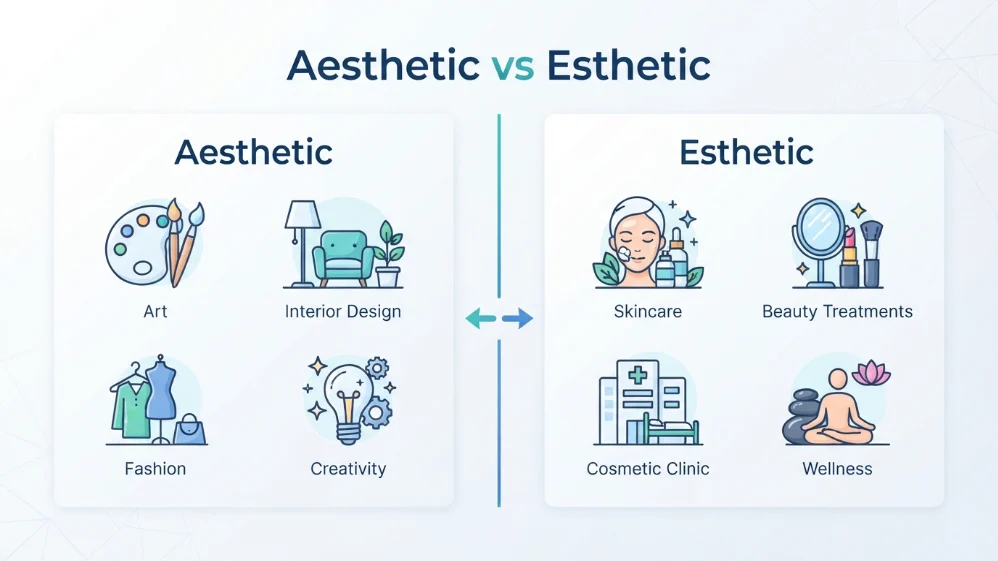
If you’re wondering whether aesthetic or esthetic is correct, the answer is that both spellings are correct. Aesthetic is the standard spelling used in British English and is also the most common spelling worldwide. Esthetic is an accepted American English variant, although it is used less often except in certain fields, such as cosmetic medicine and dentistry.
Examples
- She has an aesthetic sense of design. ✅
- The clinic offers esthetic treatments. ✅
- The room has a modern aesthetic. ✅
- He studies aesthetics in philosophy. ✅
The Origin of Aesthetic and Esthetic
The word aesthetic comes from the Greek word aisthētikos, meaning relating to perception or sensation. It later entered Latin before becoming part of English during the 18th century, especially in discussions about art, beauty, and philosophy.
Originally, English writers used the spelling aesthetic, keeping the Greek-inspired ae at the beginning of the word. This spelling became the traditional form in British English.
Later, American English simplified the spelling of many words by removing unnecessary letters. As a result, esthetic appeared as a simplified American variant. Although it never completely replaced aesthetic, it became accepted in dictionaries and is still used today.
Today, both words have the same meaning. The difference is simply a matter of regional spelling preference rather than definition.
Word History at a Glance
| Period | Development |
|---|---|
| Ancient Greek | Aisthētikos meant perception or sensation. |
| Latin | The word passed into scholarly Latin. |
| 18th Century English | Aesthetic became common in discussions of beauty and art. |
| Modern American English | Esthetic emerged as a simplified spelling. |
British English vs American English Spelling
The biggest difference between aesthetic and esthetic is regional preference.
British English continues to use aesthetic almost exclusively. American English recognizes both spellings, but aesthetic remains far more common in books, websites, journalism, education, and everyday writing.
The spelling esthetic appears more frequently in professional fields related to beauty, skincare, dentistry, and cosmetic treatments in the United States.
Comparison Table
| Feature | British English | American English |
|---|---|---|
| Preferred spelling | Aesthetic | Aesthetic (most common) |
| Alternative spelling | Rare | Esthetic (accepted variant) |
| Used in schools | Aesthetic | Mostly aesthetic |
| Common in publishing | Aesthetic | Mostly aesthetic |
| Beauty industry | Aesthetic | Both aesthetic and esthetic |
Examples
British English
- The museum has excellent aesthetic appeal.
- The building reflects modern aesthetic principles.
American English
- The spa provides esthetic services.
- She loves minimalist aesthetic design.
Which spelling appears more often?
Although both are correct, aesthetic is the spelling most readers expect to see. It dominates online articles, books, newspapers, academic writing, and international publications. Unless you are writing specifically for an American cosmetic or dental audience that prefers esthetic, aesthetic is usually the safest choice.
Why Is There Confusion Between Aesthetic and Esthetic?
Many English words have regional spelling differences, and aesthetic is one of them. Because both spellings are accepted, writers often struggle to decide which one fits their audience.
Here are the main reasons people confuse these spellings.
Regional spelling differences
British English favors aesthetic, while American English accepts both forms. Seeing different spellings in books, websites, and advertisements makes many people think one must be incorrect.
The silent “A”
The word begins with ae, but the first letter is not pronounced separately. Since both spellings sound exactly the same, many people naturally write esthetic after hearing the word.
Autocorrect and spell-check
Different devices, browsers, and writing software follow different dictionaries. One program may recommend aesthetic, while another accepts esthetic, making the correct choice seem unclear.
Industry-specific usage
Medical spas, cosmetic clinics, skincare centers, and dental practices in the United States often use esthetic in their branding or professional titles. Meanwhile, universities, publishers, and design professionals usually prefer aesthetic.
Search behavior
People frequently search for both spellings because they want confirmation before publishing articles, academic papers, business documents, or social media posts. Search engines recognize that users are looking for the same concept regardless of spelling.
Which Spelling Should You Use?
The best spelling depends on your audience and writing purpose.
If you’re writing for an international audience
Use aesthetic.
It is the most recognized spelling worldwide and is preferred by publishers, educators, and most English dictionaries.
If you’re writing for British English
Always use aesthetic.
This is the standard spelling taught in schools and used across newspapers, books, government publications, and professional writing.
If you’re writing for American English
You can use either spelling.
However, aesthetic remains the more common choice in general writing. Use esthetic only if your industry, organization, or style guide specifically prefers it.
If you work in beauty or cosmetic services
Many American clinics, salons, skincare professionals, and dental practices use esthetic in titles such as:
- Esthetic treatments
- Licensed esthetician
- Esthetic services
- Medical esthetics
In these contexts, esthetic may better match industry expectations.
Practical Writing Tips
- Choose one spelling and use it consistently throughout your document.
- For blogs, education, business writing, and general content, aesthetic is usually the safest option.
- Follow your organization’s style guide if one exists.
- Consider your readers before choosing a spelling.
- When in doubt, use aesthetic, as it is the most widely recognized form.
Common Mistakes with Aesthetic and Esthetic
Even though aesthetic and esthetic are both correct spellings, writers often make mistakes by mixing them incorrectly or misunderstanding their meaning. Here are the most common errors and how to avoid them.
| Incorrect Usage | Correct Usage | Explanation |
|---|---|---|
| The room has a modern esthetic style. | The room has a modern aesthetic style. | In general writing, aesthetic is more widely used. |
| She offers aesthetician services. | She is a licensed esthetician. | Esthetician is the common job title in the U.S. beauty industry. |
| The painting is very aesthetical. | The painting has great aesthetic appeal. | Aesthetical exists but is rarely used in modern English. |
| I love your esthetic. | I love your aesthetic. | The spelling aesthetic is preferred in everyday writing and social media. |
| Use both spellings in one article. | Choose one spelling and stay consistent. | Consistency makes your writing look more professional. |
Tips to Avoid Mistakes
- Remember that both spellings are correct, but aesthetic is more common.
- Match your spelling to your audience.
- Stay consistent throughout your document.
- Check your organization’s style guide if you’re writing professionally.
- Don’t assume esthetic is incorrect—it is simply less common.
Aesthetic and Esthetic in Everyday Examples
Seeing words in real-life situations makes them easier to understand. Here are examples from different types of writing.
We updated the website to create a cleaner aesthetic that reflects our brand.
News Article
The museum received praise for its modern aesthetic and thoughtful architecture.
Social Media
Loving this cozy autumn aesthetic today!
Business Writing
Our design team focused on improving the product’s visual aesthetic.
Interior Design
The apartment follows a Scandinavian aesthetic with simple furniture and neutral colors.
Fashion
Her clothing style has a vintage aesthetic inspired by the 1990s.
Beauty Industry
The clinic specializes in advanced esthetic treatments for skin care.
Academic Writing
The philosopher discussed the role of aesthetics in artistic expression.
Google Trends and Usage Behavior
People search for aesthetic or esthetic because they want to know which spelling is correct before publishing something important. The question often appears while writing essays, blogs, marketing content, emails, or professional documents.
Search behavior shows several common intentions:
- Users want the correct spelling.
- They wonder whether one version is British and the other American.
- They want to avoid mistakes in formal writing.
- They need the preferred spelling for school or work.
- Some search because they see esthetic in beauty clinics and aesthetic everywhere else.
Worldwide, aesthetic appears much more frequently in books, websites, news articles, educational materials, and online content. Esthetic remains a recognized alternative, mainly in American professional settings such as skincare, cosmetic medicine, and dentistry.
Because both spellings are accepted, search engines understand that users are usually looking for the same topic regardless of which version they type.
Comparison Table
| Feature | Aesthetic | Esthetic |
|---|---|---|
| Meaning | Related to beauty, appearance, or artistic taste | Same meaning |
| Correct or Incorrect | Correct | Correct |
| Most Common Usage | Worldwide and British English | Accepted American variant |
| Everyday Writing | Very common | Less common |
| Academic Writing | Preferred | Rare |
| Professional Beauty Industry | Common | Common in some U.S. industries |
| International Audience | Best choice | Less common |
| Formal Writing | Recommended | Acceptable in specific contexts |
Frequently Asked Questions
1. What is the correct spelling: aesthetic or esthetic?
Both spellings are correct. Aesthetic is the standard spelling in British English and the most common choice worldwide. Esthetic is an accepted American English variant, especially in beauty, skincare, and cosmetic professions.
2. Is esthetic a real word?
Yes. Esthetic is a real English word recognized by major dictionaries. It has the same meaning as aesthetic, although it is used less often outside certain American industries.
3. Why do people confuse aesthetic and esthetic?
The confusion exists because both spellings sound identical and share the same meaning. Regional spelling differences, autocorrect suggestions, and professional industry preferences make many writers unsure which version they should use.
4. Which spelling is more common?
Aesthetic is by far the more common spelling. It appears more often in books, schools, universities, news articles, websites, and international publications, making it the safest choice for most writers.
5. Is aesthetic British or American?
Aesthetic is the traditional British spelling, but it is also widely used in American English. Even in the United States, many publishers and writers prefer aesthetic over esthetic.
6. When should I use esthetic?
Use esthetic if you are writing for an American audience or following industry terminology in skincare, cosmetic medicine, dentistry, or beauty services. Otherwise, aesthetic is usually the better choice.
Conclusion
Choosing between aesthetic or esthetic is easier once you understand that both spellings are correct. The difference is not in meaning but in regional preference and usage. Aesthetic is the standard spelling in British English and the most common form used worldwide, making it the safest choice for blogs, business writing, academic work, and international audiences. Esthetic remains a valid American variant and is especially common in beauty, skincare, cosmetic medicine, and dental professions. By selecting the spelling that matches your audience and using it consistently, you can write with confidence and avoid unnecessary confusion.
Read More Related Articles:
Christening or Baptism| What’s the Difference and Which …
Fiending or Feening| Which Word Is Correct? Meaning …